High Protein Breakfast Ideas for Women Over 40 (Quick & Easy)
Five-Minute Egg Bowl. Protein Smoothie. Cottage Cheese Bowl. Greek Yogurt Parfait. Salmon Scramble. Those are the high protein breakfast options I actually make on repeat, and I’ll walk through all five below. But I want to start with what I was eating before I landed on them, because that’s the part that actually explains why 35-40g at breakfast matters so much after 40.
For about three weeks, my breakfast was a bar labeled “high protein” and a coffee, eaten on my way out the door at 6:50am. The label said the protein was there. Bar after bar, day after day, I trusted the number on the front of the wrapper and didn’t look much further. By 10am I couldn’t focus, and I wanted something sweet badly enough that I’d start negotiating with myself about it. Another coffee didn’t touch the hunger. I kept thinking: I’m eating protein, so why am I this hungry by mid-morning?
My first guess was that the bars simply didn’t have enough protein, so I switched to ones with a higher gram count. Nothing changed. The 10am wall showed up on schedule regardless of which bar I’d eaten. It took me longer than I’d like to admit to actually read the rest of the ingredient list, where I found 12 to 16 grams of added sugar sitting right next to the protein claim. I wasn’t short on protein. I was short on a breakfast that didn’t spike and crash before lunch even arrived.
That’s the real starting point for this guide: five high protein breakfast options that actually deliver 35-40g of real protein, why that specific range matters so much for women over 40, and what to watch for so you don’t end up where I did.
Why a High Protein Breakfast Works So Well After 40
The 35-40g target isn’t a round number someone picked for marketing. It’s the range that research on gut hormones and muscle protein synthesis keeps landing on as the point where a meal produces a maximal response. Below roughly 20g, the effect on hunger is weak. Somewhere above 50g in one sitting, the extra protein mostly gets used for energy rather than the specific satiety and muscle-building signals we’re after. The 35-40g window is where a high protein breakfast does the most work.
For women over 40, that morning decision carries more weight than it used to. Blood sugar stability, hunger hormones, and cortisol all set their pattern for the day in the first two to three hours after waking. A high protein breakfast produces a noticeably different cascade than a carbohydrate-heavy one, and the difference shows up by mid-morning, not just on a lab report months later.
Why My Protein Bars Missed the Point
This is the mechanism that explains my own three weeks of confusion: protein itself blunts hunger by triggering specific gut hormones, but added sugar triggers an insulin response that works against that signal. A bar can have 15g of protein and 14g of added sugar in the same wrapper, and the sugar spike hits first. By the time the protein’s satiety signal would normally kick in, blood sugar has already climbed and started to fall again, and that drop is what shows up as the 10am wall. The protein wasn’t the problem. It just wasn’t doing its job alone.
The GLP-1 Connection
GLP-1 (glucagon-like peptide-1) is the same satiety hormone that GLP-1 medications like semaglutide are designed to mimic pharmacologically. Your gut produces it naturally in response to food, and protein is one of the strongest natural triggers. A 2021 review in Advances in Nutrition laid out how amino acids from digested protein activate receptors on intestinal cells that release GLP-1, and how that release tends to be strongest when the gut has been empty for a while, which describes the fasted state most of us wake up in.
A separate study on breakfast specifically found that a meal built around 60% of its calories from protein produced a bigger GLP-1 and PYY (another satiety hormone) response than an equivalent breakfast built around fat or carbohydrate (Obesity, 2013). That’s part of why the type of breakfast matters more than just cutting calories across the board: the hormonal response to a high protein breakfast is different, not just smaller in volume.
What a High Protein Breakfast Actually Does
Sources: Advances in Nutrition, 2021; Obesity, 2013
This is why the protein breakfast shift felt different from other diet changes I’ve tried. I wasn’t just eating fewer calories. I was triggering a hormonal signal that changed how hungry I felt for hours afterward. The absence of that 10am wall wasn’t willpower. It was the direct result of what was actually in the meal, not what the label promised.
The 5 Options at a Glance
Here’s how the five high protein breakfast options in this guide compare, so you can pick based on how much time you actually have on a given morning.
| Option | Protein | Time | Best For |
|---|---|---|---|
| 5-Minute Egg Bowl | ~38g | 5 min | No protein powder on hand |
| Protein Smoothie | ~37g | 3 min | Truly rushed mornings |
| Cottage Cheese Bowl | ~35g | 2 min | Zero cooking, zero cleanup |
| Greek Yogurt Parfait | ~36g | 2 min | Something that feels like a treat |
| Salmon Scramble | ~40g | 8 min | Weekend mornings with more time |
Option 1: The 5-Minute Egg Bowl
Ingredients
- 3 whole eggs, scrambled or fried
- ½ cup cottage cheese, served alongside
- A handful of spinach or arugula
- ½ avocado
- Salt, pepper, hot sauce if you want it
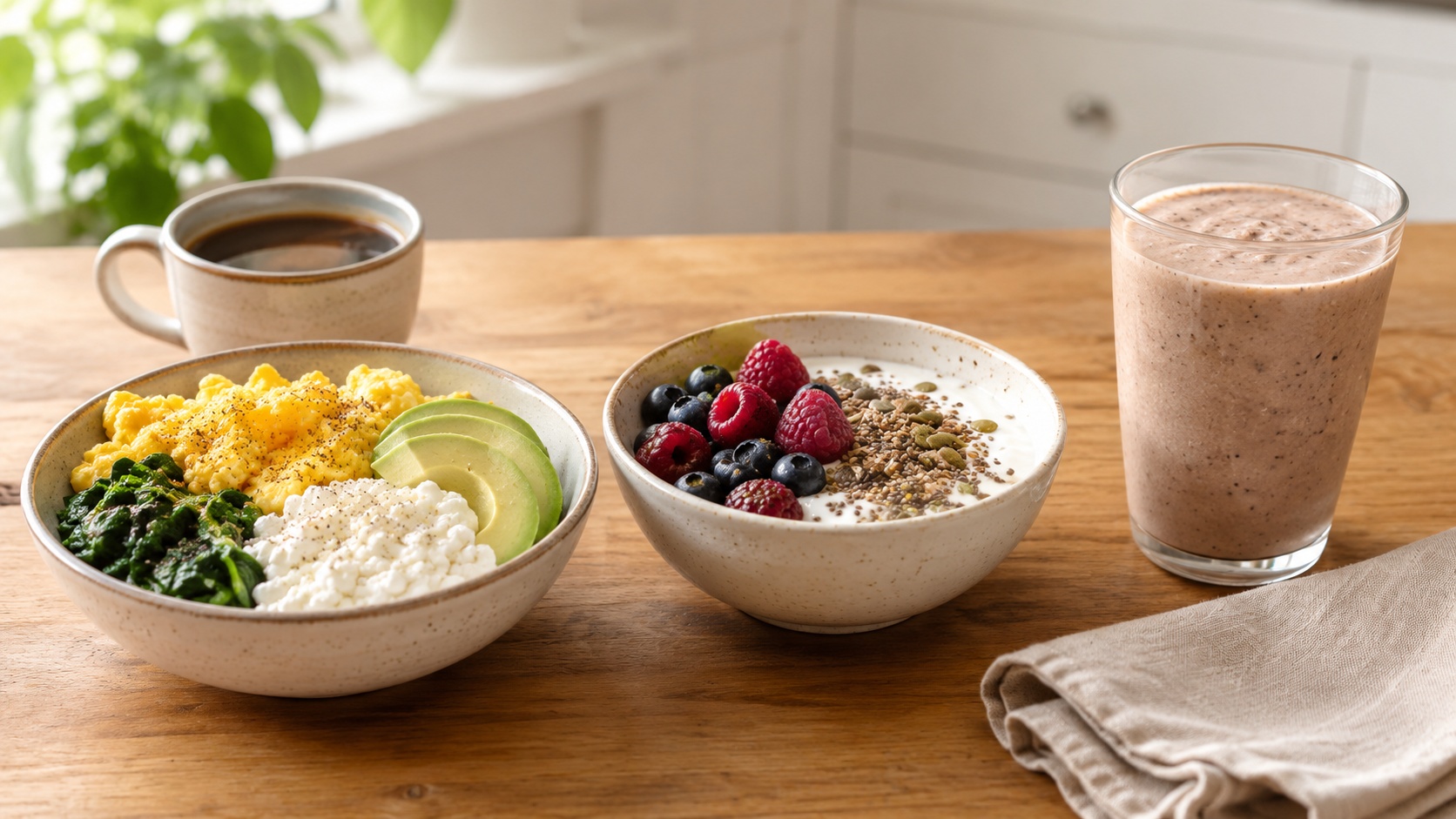
Time: 5 minutes. Protein: ~38g. This is the fastest high protein breakfast that doesn’t rely on a scoop of powder. Cottage cheese served alongside the eggs, rather than folded into them, adds about 14g of protein to a meal that’s already protein-dense on its own.
Option 2: The Protein Smoothie
Ingredients
- 1 scoop protein powder (whey, casein, or pea, roughly 25-30g protein)
- 1 cup frozen mixed berries
- 1 cup plain kefir or unsweetened almond milk
- A large handful of spinach, invisible once blended
- 1 tbsp almond butter
- Optional: 1 tbsp chia seeds for extra fiber
Time: 3 minutes. Protein: ~37g. This is what I make on the mornings that are too compressed for anything else. The almond butter isn’t just flavor, it slows down how quickly the whole thing digests, which extends how long the fullness lasts.
Option 3: The Cottage Cheese Bowl
Ingredients
- 1 cup full-fat or 2% cottage cheese
- ½ cup blueberries or raspberries
- 1 tbsp hemp seeds or ground flaxseed
- 1 tbsp chopped walnuts or almonds
- A small drizzle of raw honey, optional
Time: 2 minutes. Protein: ~35g. Nothing here touches a stove. A single cup of cottage cheese carries about 28g of protein before anything else is added, and the nuts supply the fat that slows digestion and keeps the fullness going.
Option 4: The Greek Yogurt Parfait
Ingredients
- 1 cup full-fat Greek yogurt, plain (sweetened versions add too much sugar)
- 1 scoop collagen peptides or protein powder, optional, adds 10-20g protein
- ½ cup berries
- 2 tbsp granola, kept small, for texture rather than as a carb source
- 1 tbsp hemp seeds
Time: 2 minutes. Protein: ~36g with the added powder. Plain Greek yogurt alone gets you to roughly 17-20g depending on the brand, and the added collagen or protein powder closes the rest of the gap. The plain part matters. This is exactly where a lot of “healthy” yogurts quietly add 15-25g of sugar, which is the same trap I fell into with my protein bars, just in a different container.
Option 5: The Salmon Scramble
Ingredients
- 2 whole eggs
- 60g smoked salmon or leftover cooked salmon
- 1 tbsp cream cheese or Greek yogurt, for creaminess
- Fresh dill and capers, optional
- ½ cup cherry tomatoes on the side
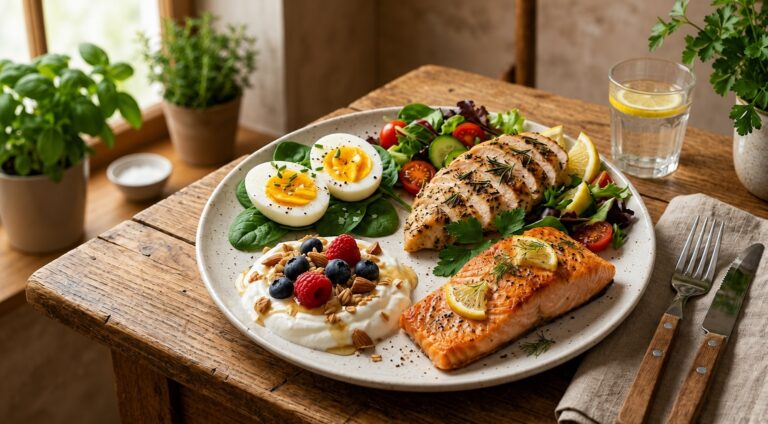
Time: 8 minutes. Protein: ~40g. This is the highest-protein option here, and it also brings omega-3s from the salmon along for the ride, so it’s doing double duty on protein and on the anti-inflammatory side. I save this one for weekend mornings when there’s a little more time.
The Protein Bar Trap (and Other Mistakes)
My own three weeks with those bars turned out to be a fairly common trap, and it’s worth naming the pattern clearly so you don’t spend the same three weeks I did.
What to Watch For
- “High protein” labels that hide added sugar. A front-of-package protein claim tells you nothing about what else is in the bar. Flip it over. If added sugar is in the first five ingredients, the protein number on the front isn’t the whole story.
- Sweetened Greek yogurt. Many popular Greek yogurts carry 15-25g of added sugar per container, enough to trigger the same insulin spike the protein was supposed to help prevent. Buy plain and add fruit yourself.
- Protein at breakfast, nowhere else. A high protein breakfast produces roughly 4-6 hours of stability, but if lunch and dinner drop back to 15g each, the cumulative daily total that actually preserves muscle after 40 (generally 90-120g/day) never gets reached. Breakfast is the start, not the whole plan.
- Loading smoothies with high-sugar fruit. Mango, banana, and grapes blended with protein powder produce a much sharper glucose response than eating the same fruit whole, because blending breaks down the fiber that would normally slow absorption. Berries and green apple keep the smoothie’s blood sugar response gentler.
Once I swapped the bars for something like the egg bowl or the cottage cheese bowl, the 10am wall didn’t ease off gradually. It was gone within about four days. That’s the version of “immediate results” that’s actually realistic here: not weight loss by day four, but the hunger and energy pattern that had been driving my eating decisions all day finally settling down.
Timing and the Coffee Question
Two timing details make a high protein breakfast work better, beyond just what’s on the plate.
- Eat within one to two hours of waking. The fasted state first thing in the morning is when the GLP-1 response to a protein-heavy meal is strongest. Pushing breakfast past two hours doesn’t add a benefit for most women over 40. It mostly means more time with cortisol elevated and hunger signaling running unmanaged.
- Delay coffee by 60-90 minutes after waking. Cortisol peaks in that first hour or so after you wake up, and caffeine on top of that peak amplifies it further. Waiting until cortisol has started to come back down means less cortisol-driven signaling toward fat storage, and the caffeine still does its job of waking you up, just without stacking on top of an already-elevated curve.
The habit compounds on itself once it’s in place. Most women who keep a consistent high protein breakfast for two to three weeks notice afternoon cravings ease off, dinner portions shrink without deciding to shrink them, and the pull toward evening snacking fades. That downstream effect is really the point of getting the morning meal right in the first place.
Frequently Asked Questions
What if I’m not hungry in the morning?
Reduced morning appetite is common after 40 and often tracks with cortisol patterns and the broader hormonal shifts of perimenopause. Start small. Even a protein smoothie within 90 minutes of waking captures most of the benefit. Forcing down a large meal you don’t want can raise cortisol on its own, so start with whichever high protein breakfast option feels manageable and build from there.
Is 35-40g of protein at breakfast too much?
No. That range is where the research on GLP-1 stimulation and muscle protein synthesis from a single meal levels off. The upper effective limit per meal is generally around 40-50g for most women; beyond that, the extra protein is mostly used for energy rather than the muscle and satiety signals this guide is built around. 35-40g sits comfortably inside the useful range.
Do I need protein powder to hit 35g?
No. The egg bowl, the cottage cheese bowl, and the salmon scramble all reach 35g or more using whole foods alone. Protein powder is convenient on the mornings you need speed, but it isn’t required to hit the target.
Can I do intermittent fasting and still eat a high protein breakfast?
Yes. Just make the first meal in your eating window the high protein one. On a 14:10 schedule with a 9am first meal, that 9am meal is your “breakfast,” and it should still land in the 35-40g range. The GLP-1 benefit of a high protein meal in a fasted state applies whenever that fasted state happens to fall.
Which of these five would you actually make on a Tuesday morning? Tell me in the comments. It helps me figure out what’s realistic to write about next.
The Bottom Line
A high protein breakfast is one of the highest-leverage single changes most women over 40 can make, because it sets the hormonal tone for hunger and cravings for the rest of the day. It’s not about eating more food in the morning. It’s about making sure the protein you eat is actually doing what a label promises it’s doing.
You don’t need to make all five options. Pick the one that fits your schedule this week: the egg bowl if you’ve got five minutes and real food in the fridge, the smoothie if mornings are tight, the cottage cheese bowl if you want zero cleanup. Do that one thing consistently and pay attention to what changes by week two.
My own three weeks with a mislabeled protein bar taught me the target isn’t just a number on a wrapper. 35-40g of real protein, without the added sugar riding along next to it, is the version that actually works.
Medical Disclaimer: This post is for informational purposes only and does not constitute medical advice. Consult your healthcare provider before making significant dietary changes.