5-Day Meal Plan for Women Over 40 to Lose Belly Fat
The cold hit first. That particular refrigerator cold, faintly sweet from leftover rice on the middle shelf.
It was just past six in the evening. I had just walked in the door, dropped my bag on the chair, and pulled the refrigerator open before I had even taken off my shoes.
Inside: brown rice from two nights ago. Half a block of tofu in a shallow dish. A head of unwashed romaine. Vegetable soup with the lid pressed on. In the freezer, a piece of fish I had not yet thawed.
I stood there longer than made sense. Not because there was nothing to eat. Because nothing was ready. Every item still needed a decision before it could become a meal — and I was fresh out of decisions.
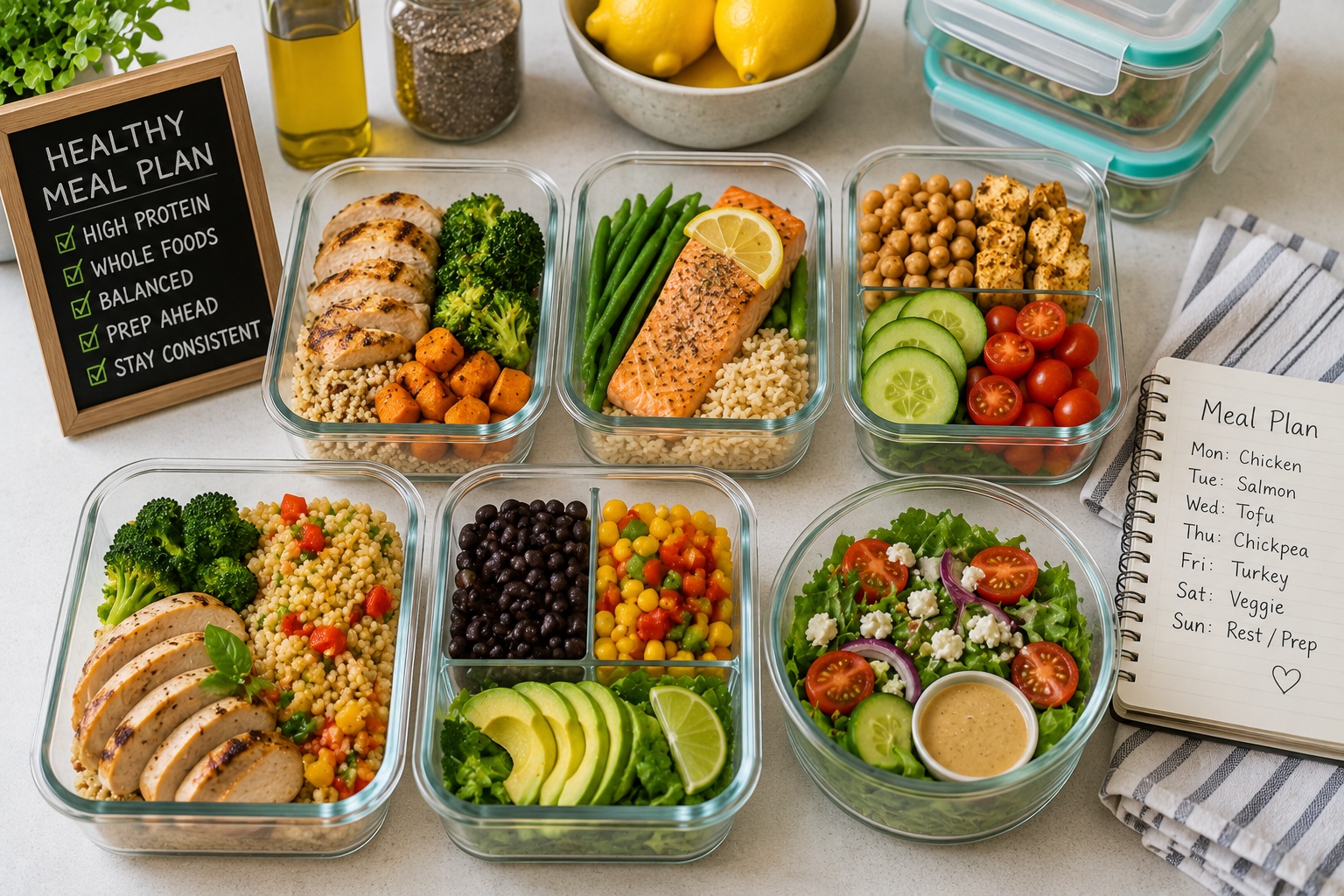
That moment is what this 5-day meal plan for women over 40 was built to prevent.
This guide covers why standard meal plans break down after perimenopause, the four structural principles this plan is built around, five days of practical meals, a 90-minute Sunday prep sequence, and a recovery formula for the days when the structure slips. If any part of that refrigerator scene felt familiar, keep reading.
Why Most Meal Plans Fail Women Over 40
Most meal plans share the same design flaw: they assume a version of you that doesn’t actually exist by 6 p.m. on a Tuesday.
The plan assumes you’ll have energy to select, prepare, and portion a balanced dinner after a full day. It assumes hunger arrives on schedule, that grocery shopping covered every ingredient, and that the week proceeds as planned. For most women over 40, none of that holds consistently, not because of discipline, but because the plan was built around ideal conditions that rarely exist.
A larger part of the problem is structural. A 2017 study in the International Journal of Behavioral Nutrition and Physical Activity found that people who planned meals weekly were significantly more likely to meet dietary quality guidelines than those who didn’t. The primary mechanism was not better nutrition knowledge. It was fewer decisions made in a hungry state.
Fewer decisions at dinnertime is the actual design goal of this plan. The table below shows the practical difference.
| Reactive Eating (Unplanned) | Structured Eating (This Plan) |
|---|---|
| Decide what to eat after hunger has already peaked | Meals decided and prepped before hunger arrives |
| Protein skipped because it requires extra preparation | Protein built into every meal, ready to assemble |
| One off-meal feels like the whole week is lost | Recovery formula restores structure in the next meal |
| Blood sugar spikes from whatever is quickest | Fiber and slow carbohydrates reduce the post-meal spike |
| Meal planning feels like one more task to manage | 90 minutes Sunday removes most weekday decisions |
| When the plan breaks, it tends to be abandoned | When a meal breaks, the next one restores the structure |
This plan works around the left column, not by requiring more willpower at dinnertime, but by shifting the difficult decisions to Sunday, when energy and clarity are higher.
The Week I Realized I Wasn’t Eating Meals — I Was Reacting
That refrigerator scene was not a single evening. It was a pattern I had been living inside for months without naming it.
Mornings were rushed, and breakfast ended up being whatever assembled fastest. Lunch was grabbed between tasks or skipped entirely. Dinner started with that same moment: cold air, full shelves, no assembled meal. It usually ended with whatever required the fewest additional decisions. Often that meant eating from individual containers while standing at the counter, then feeling unsatisfied an hour later.
The food itself was not the problem. The produce was there. The proteins were there. I had spent real effort improving what I bought, reading about nutrition, building better grocery lists. But stocking the refrigerator with good ingredients and having a meal ready are not the same thing. I had been treating them as the same thing for years, and that was the core error.
What I needed was not more nutrition information. Almost every woman over 40 who struggles with eating well already has that. What I needed was a structure that reduced the number of food decisions I made while hungry, tired, and at the end of a full day.
A refrigerator full of ingredients is not the same as dinner. Knowing what healthy eating looks like is not the same as having it ready when you’re standing in front of that refrigerator just past six at night. That gap is what this plan is designed to close.
Four Principles Behind This 5-Day Plan
Every day in this plan is built around four decisions made in advance, on Sunday, so they do not have to be made at 6 p.m. each evening.
What the Research Supports
The Four Design Principles
- Protein at every meal. Not as a macro target, but as the structural anchor that keeps energy more stable and reduces appetite spikes between meals. Each day includes 25–35g from eggs, fish, chicken, Greek yogurt, legumes, or tofu at every eating occasion.
- Fiber alongside every protein source. Vegetables, legumes, berries, or whole grains at every meal slow digestion and reduce the blood sugar response. This matters more after 40 because declining estrogen affects insulin sensitivity, making glycemic response to carbohydrates more pronounced than it was a decade earlier.
- Carbohydrates in slow, paired forms only. Brown rice, quinoa, lentils, black beans, sweet potato, and oats rather than refined grains or sweetened foods. Not eliminated, but present every day. The form and pairing with protein and fat are what matter.
- A pre-decided recovery option for each day. Every day includes a simpler backup meal that takes under ten minutes and still meets the structural criteria. Not a fallback to old patterns. A pre-made decision for the moment when the original plan is not possible.
The 5-Day Meal Plan for Women Over 40
Each day targets approximately 90–110g protein, 25–30g fiber, and 1,600–1,750 calories. The meals are built for repetition. If Day 1 breakfast holds you well for four hours, eat it every day this week. The plan works best when it is consistent, not when it is varied for its own sake.
Day 1
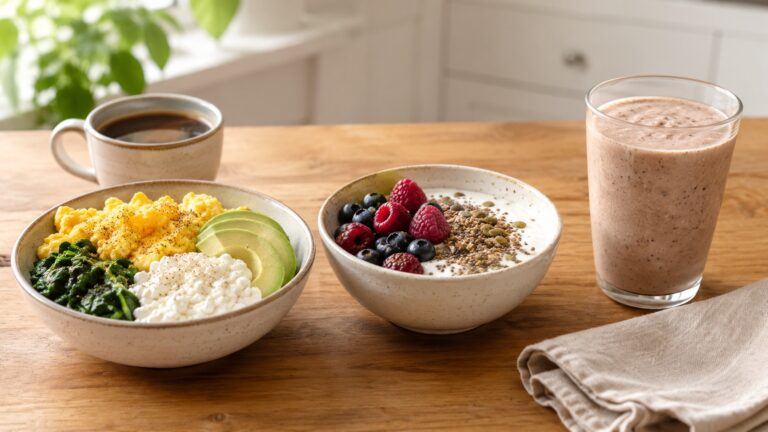
- Breakfast (35g protein): 3-egg scramble with spinach + ½ cup plain Greek yogurt + ½ cup blueberries
- Lunch (30g protein): Large salad with 5 oz grilled chicken, cucumber, cherry tomatoes, 1 tbsp pumpkin seeds, 2 tbsp olive oil and lemon
- Snack: 1 hard-boiled egg + small handful of almonds
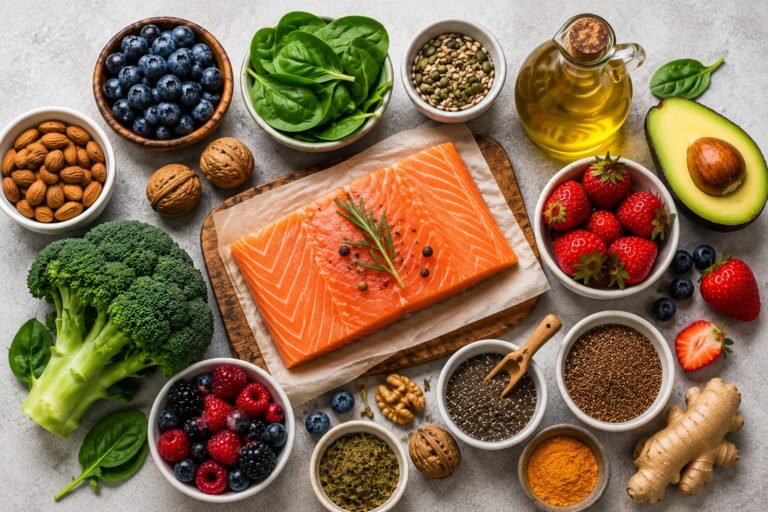
- Dinner (35g protein): 5 oz baked salmon + 1 cup roasted broccoli with garlic + ½ cup quinoa
- Daily totals: approx. 1,660 cal | 103g protein | 28g fiber
Day 2
- Breakfast (32g protein): ½ cup rolled oats cooked + 2 scrambled eggs alongside + ¼ cup mixed berries
- Lunch (28g protein): Tuna salad bowl: 1 can tuna + 2 tbsp plain Greek yogurt + celery + Dijon mustard over mixed greens
- Snack: ¼ cup hummus + sliced cucumber and bell pepper
- Dinner (34g protein): Ground turkey stir-fry: 5 oz turkey + bell peppers + broccoli + coconut aminos + ½ cup brown rice
- Daily totals: approx. 1,620 cal | 97g protein | 30g fiber
Day 3
- Breakfast (38g protein): 2 scrambled eggs + ½ cup cottage cheese + 1 slice Ezekiel bread + ¼ avocado
- Lunch (30g protein): Lentil soup, 1.5 cups + large green salad with 2 tbsp olive oil + 2 tbsp hemp seeds
- Snack: 1 cup plain Greek yogurt
- Dinner (32g protein): 5 oz baked chicken thighs + roasted Brussels sprouts + ½ cup black beans
- Daily totals: approx. 1,680 cal | 103g protein | 32g fiber
- Recovery option if dinner prep is not possible: pan-fried tofu + leftover lentil soup + microwaved brown rice + olive oil, under 10 minutes.
Day 4
- Breakfast (35g protein): Smoothie: 1 cup unsweetened almond milk + ½ cup frozen berries + 1 cup spinach + 1 tbsp almond butter + ½ cup cottage cheese (or 1 scoop protein powder)
- Lunch (30g protein): Salmon bowl: 4 oz canned or leftover salmon + mixed greens + cherry tomatoes + red onion + ¼ cup chickpeas + 2 tbsp olive oil
- Snack: 1 oz walnuts + 1 small apple
- Dinner (35g protein): 6 oz shrimp stir-fry + bok choy + mushrooms + garlic + ½ cup quinoa
- Daily totals: approx. 1,650 cal | 103g protein | 27g fiber
Day 5
- Breakfast (36g protein): 3-egg omelet with feta + ¼ avocado
- Lunch (28g protein): Repeat the Day 1–4 lunch that worked best. Consistency is the point here. The plan is designed to be repeated, not to impress with variety.
- Snack: 2 tbsp almond butter + celery sticks
- Dinner (34g protein): 5 oz grass-fed beef or extra-firm tofu (pan-fried) + small roasted sweet potato + large green salad + olive oil
- Daily totals: approx. 1,720 cal | 104g protein | 27g fiber
Sunday Prep: 90 Minutes That Changes the Whole Week
The difference between a meal plan that holds for five days and one that collapses by Wednesday is almost never the plan itself. It is what exists in the refrigerator on Monday morning.
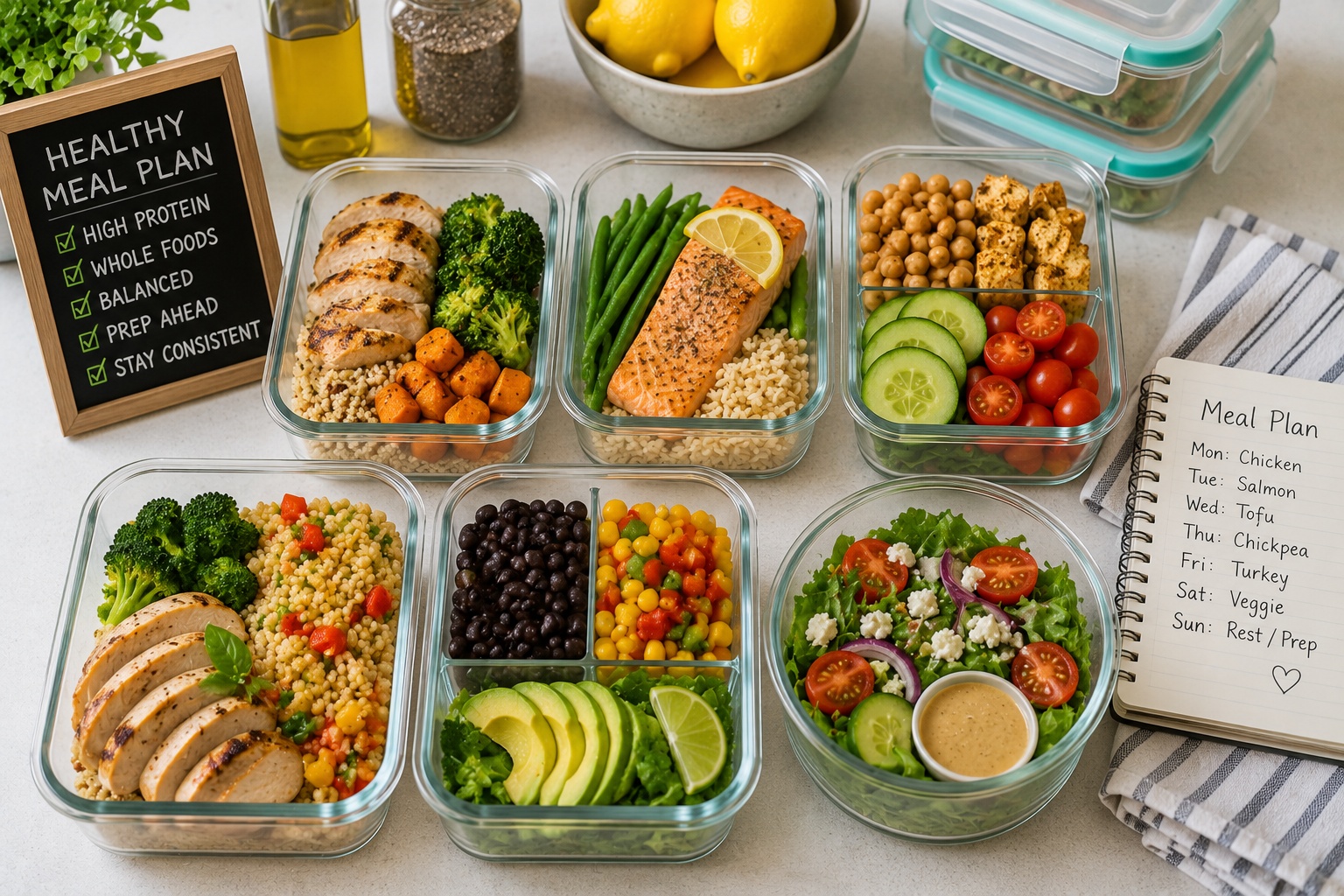
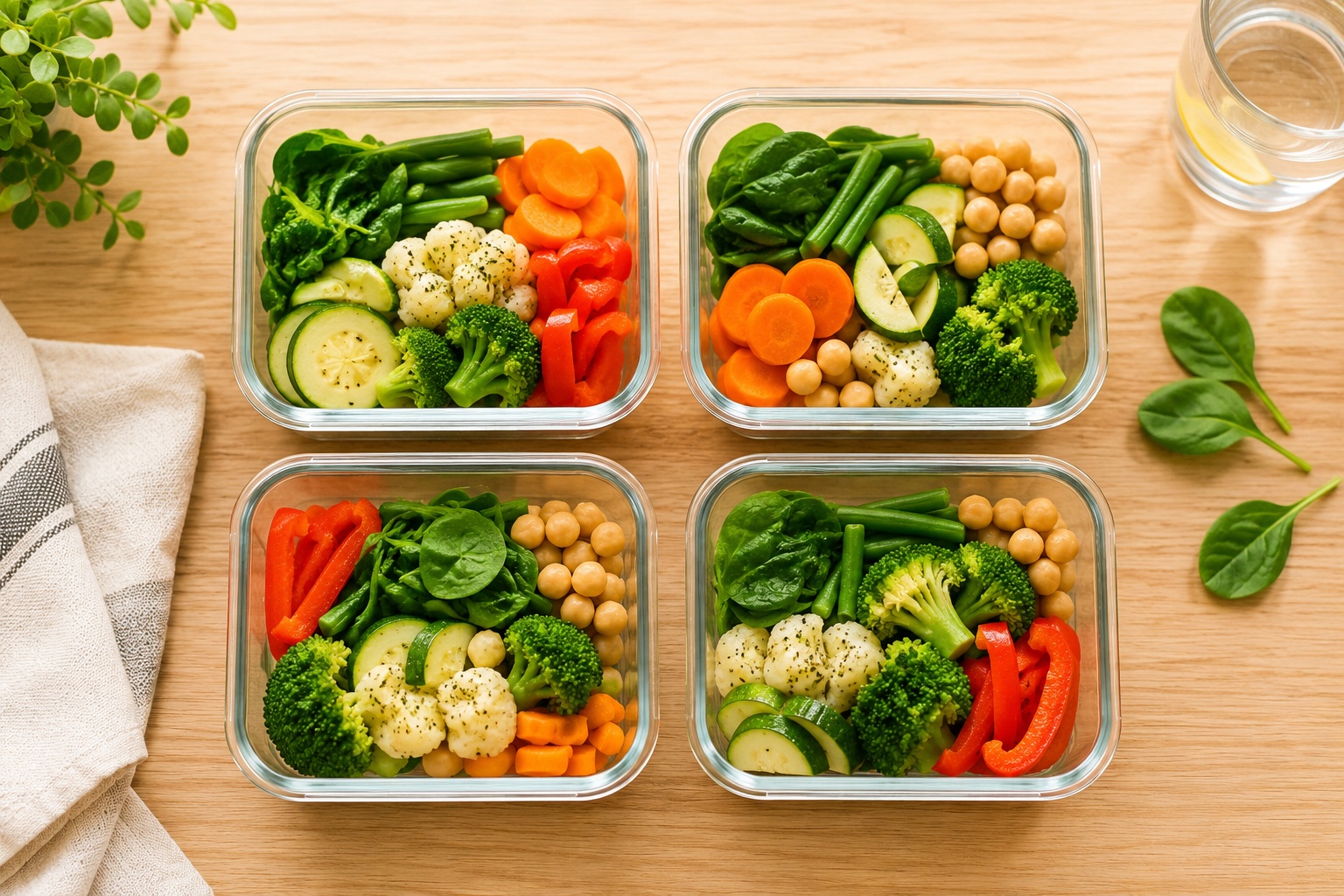
Having protein already cooked, vegetables already washed, and a grain base already prepared before the week begins changes the evening completely. When those three things exist, dinner becomes assembly: pick, heat, combine. Without them, dinner requires cooking from scratch at the end of a day when that kind of energy is already gone.
Sunday Prep: What to Do and In What Order
- Proteins first (30 min, mostly passive): Bake or grill 500–600g chicken breast on one tray; this covers 3–4 lunches or dinners. Hard-boil 6–8 eggs at the same time for snacks and breakfast additions. Open and portion canned fish into small containers for Days 2 and 4.
- Vegetables next (20 min active): Roast a full sheet pan of mixed vegetables: broccoli, Brussels sprouts, or bell peppers. While they roast, wash and dry all salad greens and store with a dry paper towel to extend freshness 3–4 days.
- Grains and legumes (15 min, passive): Cook 1.5 cups dry brown rice or quinoa. If making lentil soup, prepare a full batch; it holds well refrigerated for 4–5 days and works as both lunch and a recovery dinner.
- Recovery items (5 min): Place two blocks of firm tofu visibly in the refrigerator. Move a bag of frozen shrimp to the front of the freezer. Put one bag of pre-washed salad mix on the middle shelf where it’s visible when the door opens.
That last step matters more than it sounds. What is visible when the refrigerator opens is what gets reached for when decision energy is low.
When the Plan Falls Apart — The Recovery Formula
Day 3 was when this plan first broke for me.
That afternoon ran two hours longer than expected. By the time I got home, the dinner I had planned (salmon, roasted vegetables, and quinoa) was not going to happen. I could see all the ingredients. I did not have what it would take to prepare them properly. The cutting board, the timing of everything together, the multiple steps: it all felt like too much for what I had left that evening.
In every previous attempt at structured eating, that gap between what I planned and what I could actually execute became the moment the whole week unraveled. I’d tell myself I had failed the plan, and the thought that followed was always the same: I’ll restart Monday.
This time I did something different. I stopped trying to restore the planned meal. I just restored the structure.
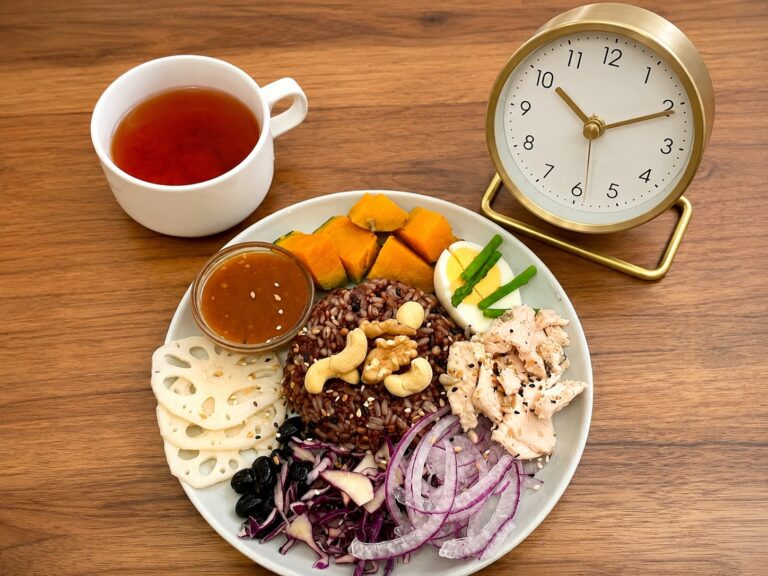
I microwaved the leftover brown rice: four minutes. Pan-fried two blocks of tofu in olive oil: seven minutes. Poured a bag of mixed greens into a bowl and added a drizzle of olive oil and a spoon of sesame seeds. Heated the container of vegetable soup from Sunday prep.
That dinner was not what the plan specified. But it had protein, fiber, a slow carbohydrate, and fat. The structure was intact. The next morning began the same way it would have if I had followed the original plan exactly.
The Recovery Formula
- Tofu (pan-fried, 7 min) + bag salad + microwaved brown rice + olive oil drizzle
- Canned fish + any frozen vegetables (microwave 4 min) + leftover quinoa + handful of walnuts
- 2 eggs scrambled (3 min) + vegetable soup + 1 slice Ezekiel toast + ¼ avocado
- Canned lentils, rinsed + any salad greens + leftover grain + sesame oil drizzle
- Cottage cheese + mixed greens + Ezekiel toast + 1 tbsp almond butter
The Most Common Form of Plan Failure
The most common form of meal plan failure is not choosing a poor meal. It is deciding the whole week is already lost because of that one meal and abandoning the structure entirely. A single off-meal does not break a plan. Declaring the week over does. The recovery formula exists for the moment that thought arrives: to make the next meal easier than restarting from scratch.
A meal plan for women over 40 that only works when everything goes right is not really a plan. It is a performance. What holds up over weeks and months is a structure you can recover into quickly, not one that requires perfect execution.
Frequently Asked Questions
Can I repeat the same meals instead of following the full five days?
Yes, and this is encouraged. If Day 1 breakfast holds you well for four hours and Day 3 lunch works reliably, eat those combinations every day this week. A meal plan for women over 40 that you actually repeat consistently is more effective than a varied one you abandon at Day 3. The structural goal (protein + fiber + slow carb + small fat) matters more than rotating through different foods.
I don’t usually eat breakfast. Does this plan require it?
The timing of your first meal matters less than its composition. If your eating window opens naturally at 10 a.m., make that first meal high-protein. The Day 3 breakfast of eggs and cottage cheese or the Day 4 smoothie both transfer easily to a later start. The plan works with your natural schedule, not against it.
Is this plan appropriate for women managing blood sugar or pre-diabetes?
The structural principles here, including pairing protein and fiber with every carbohydrate, using low-glycemic sources, and distributing intake across the day, are consistent with blood sugar management guidelines. Women managing diabetes, pre-diabetes, or significant insulin resistance should review any dietary changes with their healthcare provider before starting. For general guidance, Mayo Clinic’s diabetes nutrition resource is a useful reference.
Can vegetarians or vegans follow this plan?
All animal proteins can be swapped for plant-based equivalents. Tempeh provides around 22g protein per 100g, edamame 17g per cooked cup, lentils 18g per cooked cup, tofu approximately 10g per 100g, and hemp seeds 10g per 3 tablespoons. Hitting 90–110g daily takes more intentional planning on a fully plant-based diet, but all five days are achievable with substitutions.
What if I’m still hungry between meals?
Increase fat at each meal first: an extra tablespoon of almond butter, more olive oil, an additional quarter avocado at lunch. Fat is the slowest-digesting macronutrient and extends the satiety signal most reliably. If hunger persists after increasing fat, use a food tracking app for three days to check whether the protein target was actually being met. Estimated and measured protein intake often differ more than expected.
What do I do if Sunday prep doesn’t happen and the week starts without prepped food?
Start with the recovery formula on the first evening. Build the simplest structural meal from whatever is available: canned protein, any greens, a grain or legume from the pantry, olive oil. Then do a 30-minute partial prep: hard-boil eggs, wash salad greens, heat a can of lentils. Full Sunday prep is the goal. A partial prep on Monday evening is considerably better than waiting for the following Sunday.
The Bottom Line
A 5-day meal plan for women over 40 that holds up over weeks is not one that requires perfect execution. It is one designed to be recovered into.
The meals here are not unusual. What holds them together is a structure built around four decisions made in advance: protein at every meal, fiber alongside it, carbohydrates in slow-digesting forms, and a pre-decided recovery option for when the plan doesn’t hold. None of that requires new nutrition knowledge. It requires one Sunday afternoon and a different understanding of what “prepared” actually means.
Food in the house and a meal ready to eat are not the same thing. Closing that gap is where this plan starts. Start with Sunday. The week builds from there.
What part of this plan is most useful for where you are right now? Leave a comment below, and if you have a recovery meal that works reliably in under ten minutes, I would genuinely like to hear it.
Medical Disclaimer: This post is for informational purposes only and does not constitute medical advice. Consult your healthcare provider or a registered dietitian before making significant dietary changes, particularly if you have a medical condition, are pregnant, or are managing a chronic health issue.