7 Foods That Burn Belly Fat After 40 (Backed by Science)
The jar went back in the drawer.
Two years of fish oil capsules — every morning, no exceptions. I hated cooking salmon. The smell stayed in the kitchen for hours, and I could never get the timing right. Capsules seemed like the clean workaround: same omega-3s, no compromise.
Then I found a study comparing whole fatty fish to supplementation for visceral fat reduction specifically in postmenopausal women. The outcomes weren’t equal. Whole salmon delivers selenium, vitamin D, and complete protein alongside EPA and DHA. A capsule delivers the fatty acids and not much else. I bought two fillets that weekend and cooked them despite the smell.
Six weeks later, my clothes were fitting differently around the midsection. Quietly. For the first time in a long time.
That gap between a supplement and the actual food is where understanding foods that burn belly fat after 40 really starts. After 40, visceral fat runs on a different mechanism than it did in your 30s. Estrogen decline changes where fat is stored and how easily it releases. The compounds in whole foods address that mechanism in ways their extracted counterparts can’t fully replicate.
This post covers the seven foods with the clearest research behind their visceral fat effects, what each one does biologically, and how I actually fit them into daily eating without planning every meal from scratch.
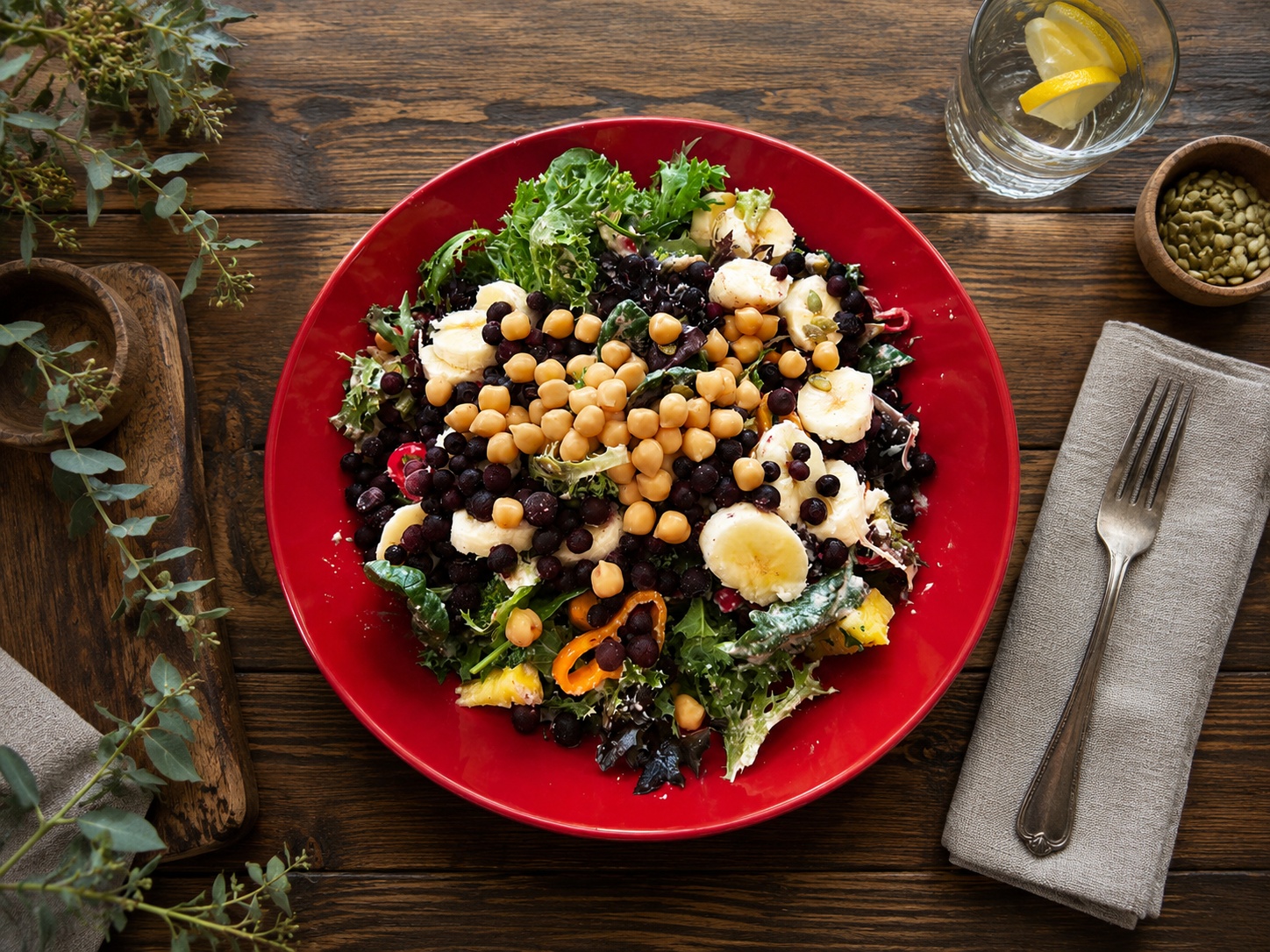
My actual lunch most days. Kale, frozen blueberries, chickpeas, and extra virgin olive oil. Four of the seven foods in one bowl.
The Supplement That Wasn’t Working
I bought those fish oil capsules carefully. I read labels, compared EPA and DHA content across brands, and picked a well-reviewed one. I took them seriously. What I didn’t do was question whether a capsule and a whole food were actually delivering the same result.
They aren’t. And the reason why clarifies a lot about how foods that burn belly fat after 40 actually work.
Visceral belly fat, the kind that accumulates around the abdomen as estrogen declines, runs on an inflammation cycle. Fat cells in the visceral region produce inflammatory proteins that worsen insulin resistance. Worse insulin resistance signals the body to store more fat in the visceral region. More visceral fat produces more inflammatory proteins. The cycle reinforces itself.
General calorie reduction slows the cycle down but doesn’t break it at any specific point. The loop keeps running on less fuel. This is why waist measurements often lag behind overall weight loss by months. Foods that actually interrupt the cycle do so through targeted biological mechanisms. Whole salmon interrupts it through EPA and DHA suppressing inflammatory cytokine production, but also through selenium, vitamin D, and protein that play separate roles in the same process. Two years of capsules gave me part of one mechanism. Switching to the actual fish activated the rest.
The Biology Behind Why These Foods Work Differently After 40
Estrogen, throughout the reproductive years, quietly directed fat storage away from the abdomen and toward the hips and thighs. It also had anti-inflammatory effects that limited visceral fat accumulation. When estrogen starts declining, often in the early-to-mid 40s, well before official menopause, both of those functions diminish. The body’s default fat storage location shifts to the abdomen. Insulin sensitivity decreases. Inflammatory tendency increases.
The inflammatory proteins driving this are called cytokines (TNF-alpha and IL-6 are the main two). They circulate through the body, worsen insulin resistance, elevate insulin output, and send more fat to the visceral region. More visceral fat produces more cytokines. Left unchecked, the loop accelerates over time.
The seven foods below work because each one interrupts a specific point in this cycle. Some suppress cytokine production directly. Some support estrogen clearance to reduce hormonal belly fat drivers. Some activate fat-mobilization signals the body extends too briefly after 40. Each has a documented mechanism. Each was chosen for that reason, not for general “healthy eating” overlap.
What the Research Shows on Visceral Fat After 40
The 7 Foods: What Each One Does
Wild-Caught Salmon
This is where I started, as the opening story shows. I had convinced myself that fish oil capsules were equivalent for two years. They weren’t.
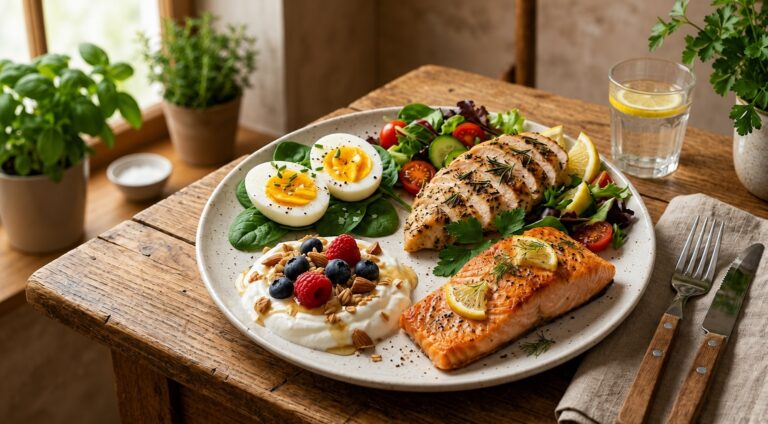
Wild-caught salmon delivers EPA and DHA, the omega-3 fatty acids that suppress the cytokine production driving the visceral inflammation cycle directly at its source. A 2022 meta-analysis covering 11 randomized controlled trials confirmed significantly greater visceral fat reduction from omega-3 intake, with the effect most pronounced in postmenopausal women (American Journal of Clinical Nutrition, 2022). Whole fish also provides selenium, vitamin D, and protein that capsules don’t. Wild-caught matters specifically: it has meaningfully higher EPA and DHA and a better omega-3 to omega-6 ratio than farmed.
I cook it at 400°F for 12 to 14 minutes with olive oil and salt. The smell that kept me on capsules for two years turned out to be manageable once I stopped avoiding it.
Target: 2 to 3 servings per week.
Blueberries
Already in my daily salad. Have been for over a year. I switched to frozen after realizing the cost of fresh made me inconsistent: fresh blueberries either got eaten within two days or went bad. Frozen are nutritionally identical, cost less than half as much, and require no decision-making.
A randomized trial published in the Journal of Nutrition found that daily blueberry consumption for 8 weeks produced significantly greater abdominal fat reduction compared to controls. The effect was attributed specifically to anthocyanin-mediated reduction in adipose tissue inflammation, not general fiber content. That specificity is what puts blueberries on this list rather than just “eat more fruit.”
Target: 1 cup daily. Frozen works exactly as well as fresh.
Cruciferous Vegetables
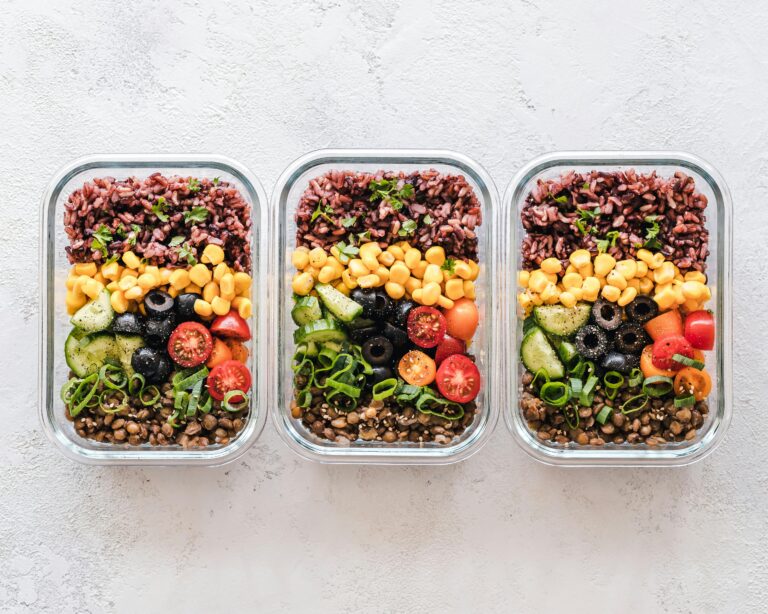
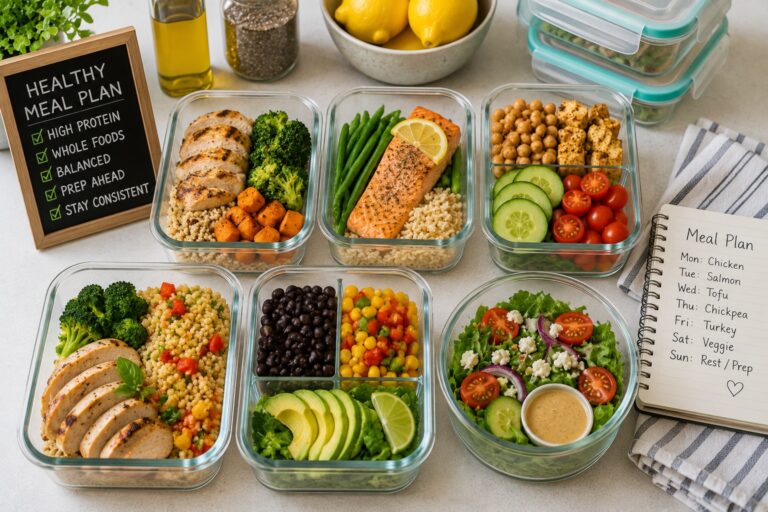
Broccoli, kale, cauliflower, cabbage, Brussels sprouts, arugula. I prep four containers on Sunday afternoon, usually 25 minutes of actual work. The whole week handled in one session.
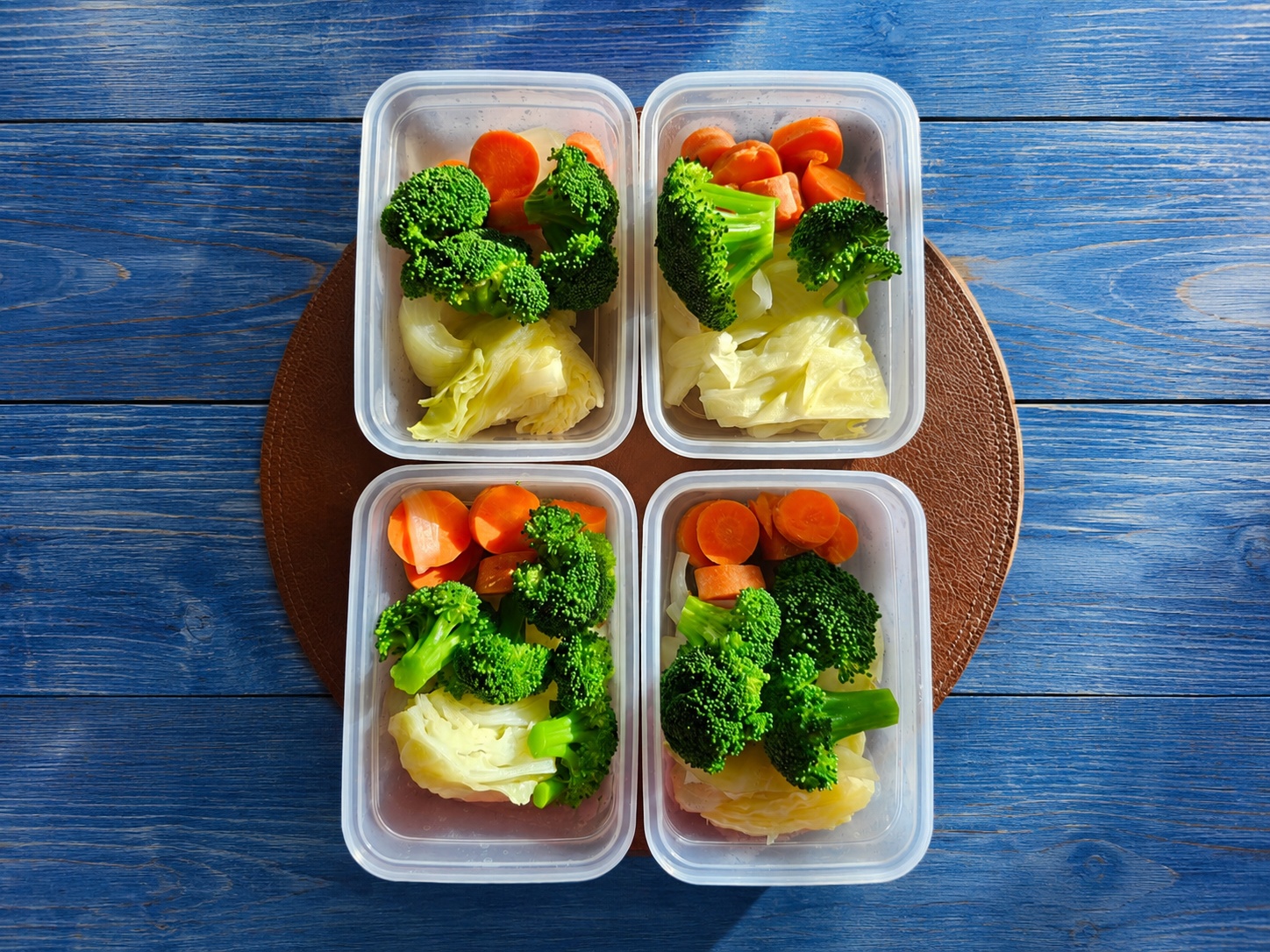
Four days of cruciferous prepped in one session. Sunday afternoon, 25 minutes.
The mechanism here goes beyond general nutrition. Cruciferous vegetables contain I3C (indole-3-carbinol) and its derivative DIM, which support estrogen clearance by promoting conversion of estrogen into its less potent, more easily eliminated forms. During perimenopause, a state of relative estrogen dominance is an active driver of abdominal fat storage. Cruciferous vegetables address this hormonal mechanism directly. Sulforaphane adds a separate anti-inflammatory pathway on top of the estrogen-clearing effect.
One mistake I made early: large quantities of raw cruciferous, thinking more was better. For women with thyroid concerns, raw cruciferous in excess can interfere with thyroid function through goitrogens. Five minutes of steaming reduces goitrogen content significantly while keeping I3C, DIM, and sulforaphane intact. I steam everything now, always, and the taste improved enough that I stopped dreading it.
Target: One serving daily, lightly steamed.
Avocado
I tracked avocado calories for years and felt guilty every time I added half to a salad. I was making the wrong calculation entirely.
Avocado works through three converging mechanisms: oleic acid activates AMPK, the body’s master metabolic switch in fat cells, promoting fat oxidation over storage; potassium supports adrenal function and cortisol regulation, and elevated cortisol is a significant driver of visceral accumulation after 40; fiber at around 7 grams per fruit feeds anti-inflammatory gut bacteria and supports satiety signaling. A 2021 randomized trial specifically in women found greater visceral fat reduction from daily avocado consumption after 12 weeks compared to a calorie-matched control group (Journal of Nutrition, 2021). Same calorie intake. More visceral fat gone.
Target: Half to one daily.
Green Tea and Matcha
EGCG, the active compound in green tea, inhibits an enzyme that normally breaks down norepinephrine, the signal that tells fat cells to release stored fat. By slowing that breakdown, EGCG extends how long the fat-mobilization signal stays active. Multiple clinical trials have shown that this effect preferentially reduces visceral fat over subcutaneous fat. That specificity is the reason it belongs here.
Matcha delivers roughly three times the EGCG of a regular brewed cup. One practical note on temperature: water at 175°F rather than boiling. Boiling water degrades EGCG and creates bitterness that makes daily use hard to sustain. I use a simple kettle thermometer. That one adjustment made matcha something I look forward to instead of something I force down.
Target: 2 to 3 cups of brewed green tea daily, or 1 to 2 matcha servings.
Legumes
Chickpeas or black beans in my salad every day, alternating. I made this change about a year ago, partly because of the protein, partly because I’d read about fiber and satiety. What I didn’t expect was the change in afternoon energy.
Before I consistently ate legumes at lunch, I had an energy drop around 4 p.m. that was reliable enough to plan around. Somewhere around the 3-week mark after adding a half cup of legumes to my lunch daily, the drop started flattening. I noticed it first as “I didn’t need to sit down after getting home.” Not a dramatic shift. Just something that had been there for years and then wasn’t.
The mechanism behind this connects to something most people haven’t heard: the soluble fiber in legumes is one of the most potent natural stimulators of GLP-1 available through food. GLP-1 is the same hormone that Ozempic and Wegovy work by mimicking. As estrogen declines, the gut’s natural GLP-1 response to food weakens, which is part of why many women in their 40s notice reduced satiety and increased hunger without eating more than before. Legume fiber supports that response through the same biological pathway. Not at drug-equivalent levels. But working with the same mechanism.
Beyond GLP-1: legumes provide resistant starch that selectively feeds anti-inflammatory gut bacteria, protein that supports satiety and muscle maintenance, and a glycemic load low enough to avoid the insulin spikes that feed the visceral fat cycle.
Target: 3 to 4 half-cup servings per week minimum. Daily is better.
Extra Virgin Olive Oil
When you swallow a sip of high-quality EVOO, you should feel a faint peppery sensation at the back of your throat. That sensation means oleocanthal is present — no pepper, no benefit worth seeking. I use it as my only cooking and finishing fat: over the salad, over roasted vegetables, over salmon before it goes in the oven.
Oleocanthal has direct COX-inhibiting anti-inflammatory effects. Two to three tablespoons daily is the range from Mediterranean diet trials showing visceral fat reduction. A light drizzle as an afterthought doesn’t reach that amount. I measure nothing, but I’m generous: the salad gets what looks like too much, the vegetables get a finishing pour, the salmon gets coated before roasting.
Target: 2 to 3 tablespoons daily as the primary fat.
| Food | Primary Mechanism | Why It Matters Specifically After 40 | Target |
|---|---|---|---|
| Wild-caught salmon | EPA/DHA suppress visceral cytokine production | Effect most pronounced in postmenopausal women (AJCN, 2022) | 2–3×/week |
| Blueberries | Anthocyanins reduce adipose tissue inflammation | 8-week RCT: preferential abdominal fat reduction (Journal of Nutrition) | 1 cup/day (frozen OK) |
| Cruciferous vegetables | I3C/DIM support estrogen clearance; sulforaphane anti-inflammatory | Targets hormonal belly fat driver directly | 1 serving/day, steamed |
| Avocado | AMPK activation + potassium for cortisol + fiber for gut signaling | 12-week RCT: greater visceral reduction vs. calorie-matched control (Journal of Nutrition, 2021) | ½–1/day |
| Green tea/matcha | EGCG extends fat-mobilization signal duration | Visceral fat reduction preferential over subcutaneous | 2–3 cups or 1–2 matcha/day |
| Legumes | Soluble fiber stimulates GLP-1; resistant starch feeds anti-inflammatory gut bacteria | Addresses weakened post-40 satiety hormone response | 3–4 servings/week+ |
| Extra virgin olive oil | Oleocanthal COX-inhibition; AMPK activation | Largest evidence base for visceral fat across Mediterranean diet trials | 2–3 tbsp/day |
What My Actual Daily Routine Looks Like
I don’t follow a meal plan. I built a small number of defaults that contain most of these foods automatically, so I don’t have to think about them.
Lunch is the same base every day: a large bowl of kale and mixed greens, frozen blueberries, whatever cruciferous I prepped that week, half an avocado, and a rotating protein: chickpeas, black beans, salmon, or egg depending on the day. Finished with extra virgin olive oil. That one bowl reaches five of the seven foods without any deliberate planning.
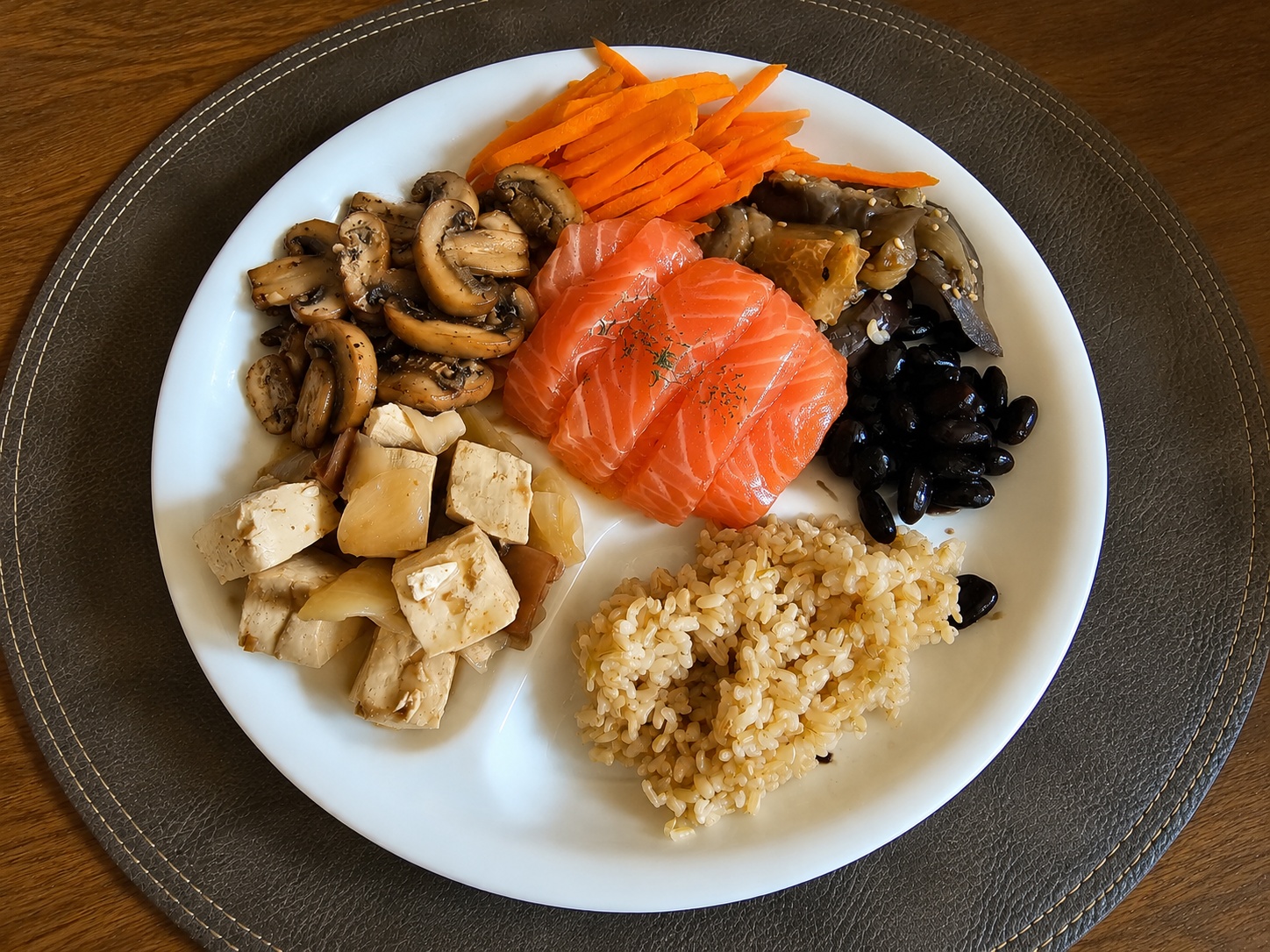
Dinner version: salmon, black beans, brown rice, sautéed vegetables, EVOO. About 20 minutes.
Dinner rotates more. Salmon appears two or three times a week. Black beans show up as a side most other nights. The prepped cruciferous goes with almost everything. EVOO finishes everything. Matcha mid-morning became automatic after about two weeks of intentionally making it at the same time.
These stopped feeling like choices around the 3-week mark. That’s the target: get past the point where each food requires a decision.
The Weekly Pattern
- Daily: Morning smoothie, lunch salad with blueberries and legumes and EVOO, cruciferous at lunch or dinner
- Daily: Avocado with lunch, matcha mid-morning
- 2 to 3 times per week: Salmon as the dinner protein
- Sunday: 4 containers of steamed cruciferous prepped, covering the whole week
This is not a diet. It’s a set of defaults that took about three weeks to stop feeling like decisions.
The Morning Habit That Started Everything
This one isn’t on the seven-food list. It belongs here anyway because it’s what first showed me how directly food choices can affect measurable biological markers.
About six weeks after I started blending carrot, apple, celery, beetroot powder, and ginger powder every morning, I noticed I’d stopped reaching for the orange juice carton in the fridge door without even deciding to. It had just quietly become what mornings looked like now, the same way coffee had always been the one ritual I never skipped.
Nothing about the switch felt significant at the time. A glass of something sweet and processed, replaced by five minutes with a blender. The kind of small substitution that’s easy to dismiss until you realize you haven’t gone back to the old version in weeks.
That’s what made me start taking eating specific foods seriously, rather than just eating generally healthy. It turns out those are two different lists.
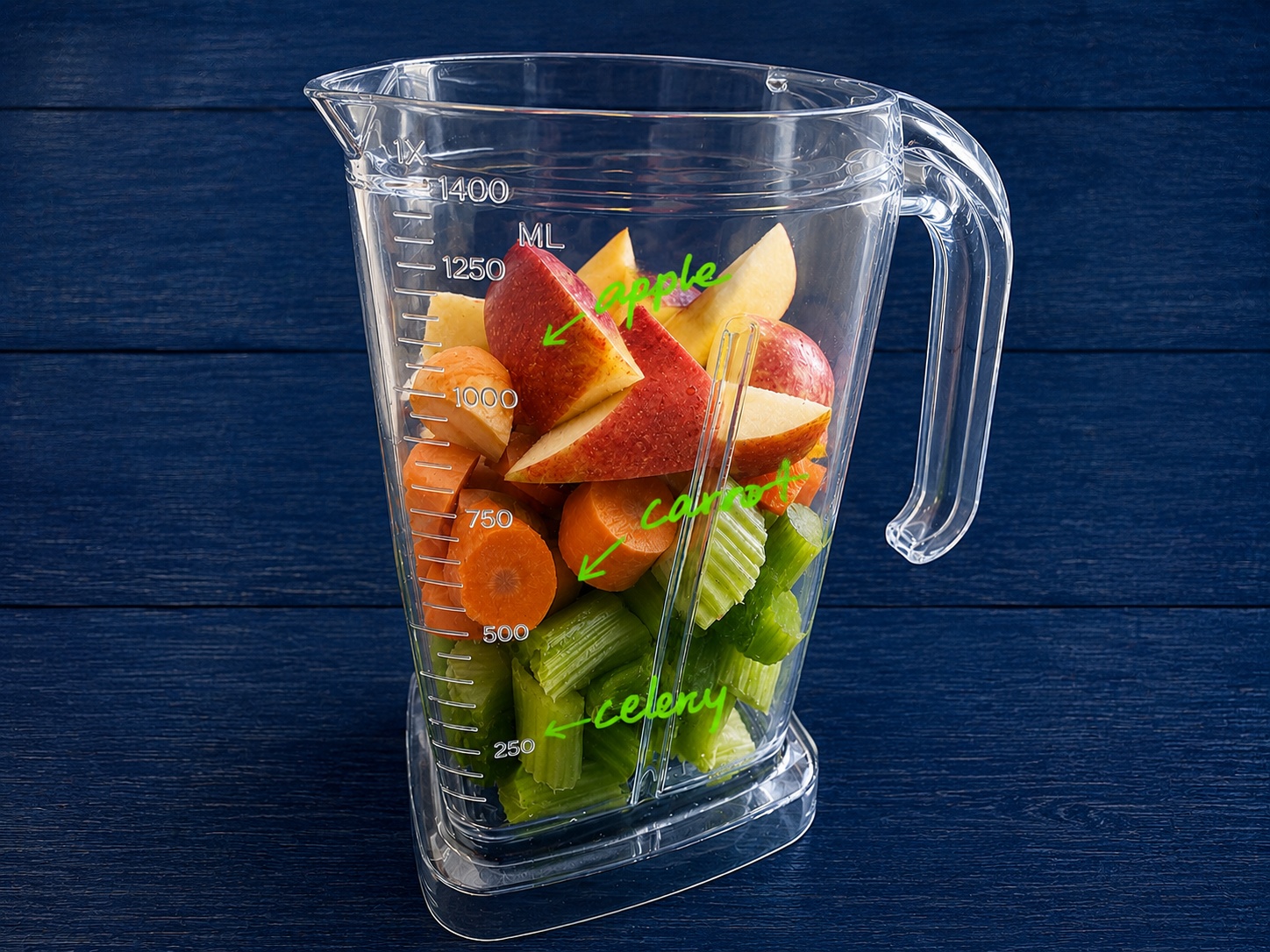
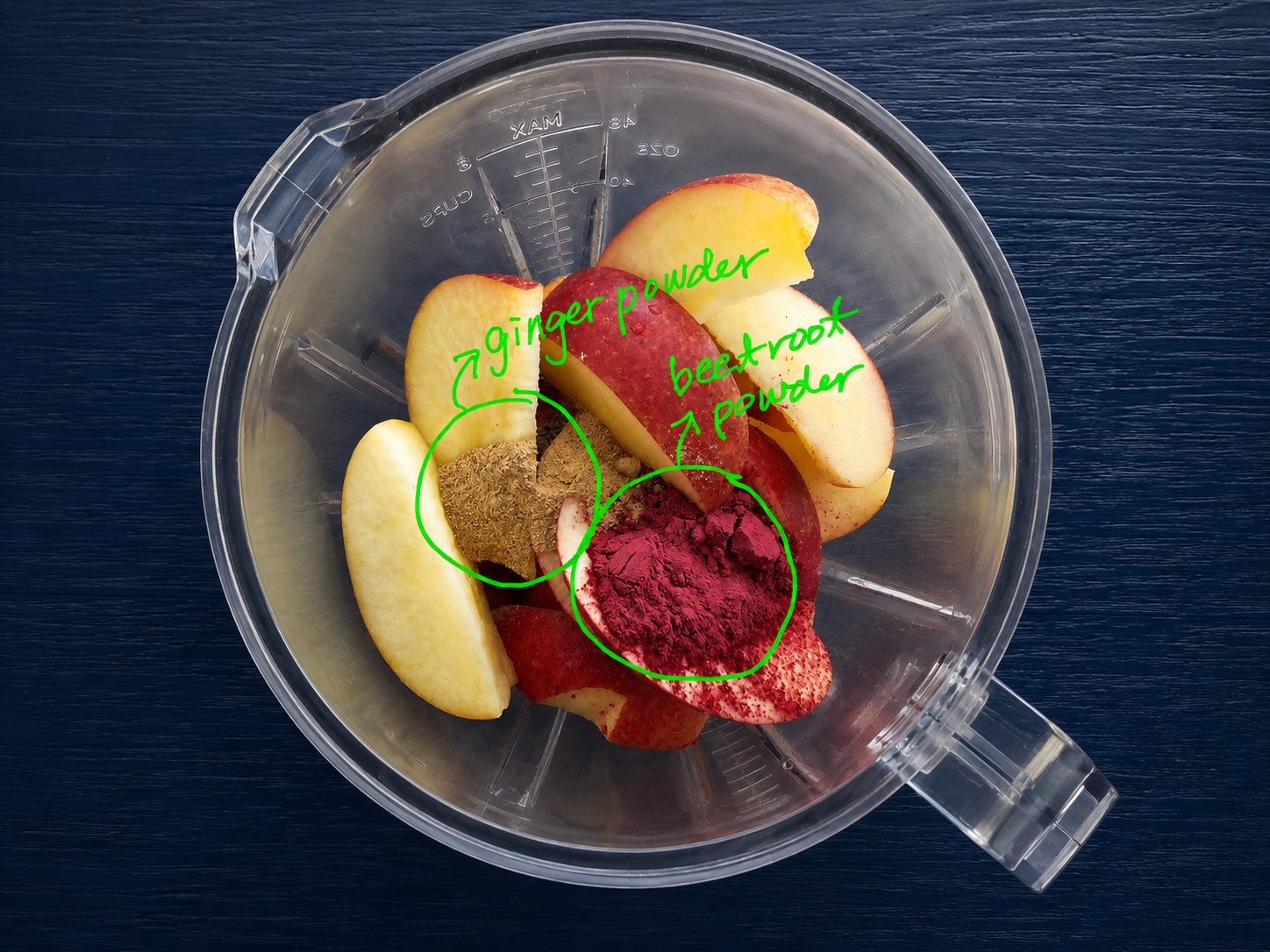
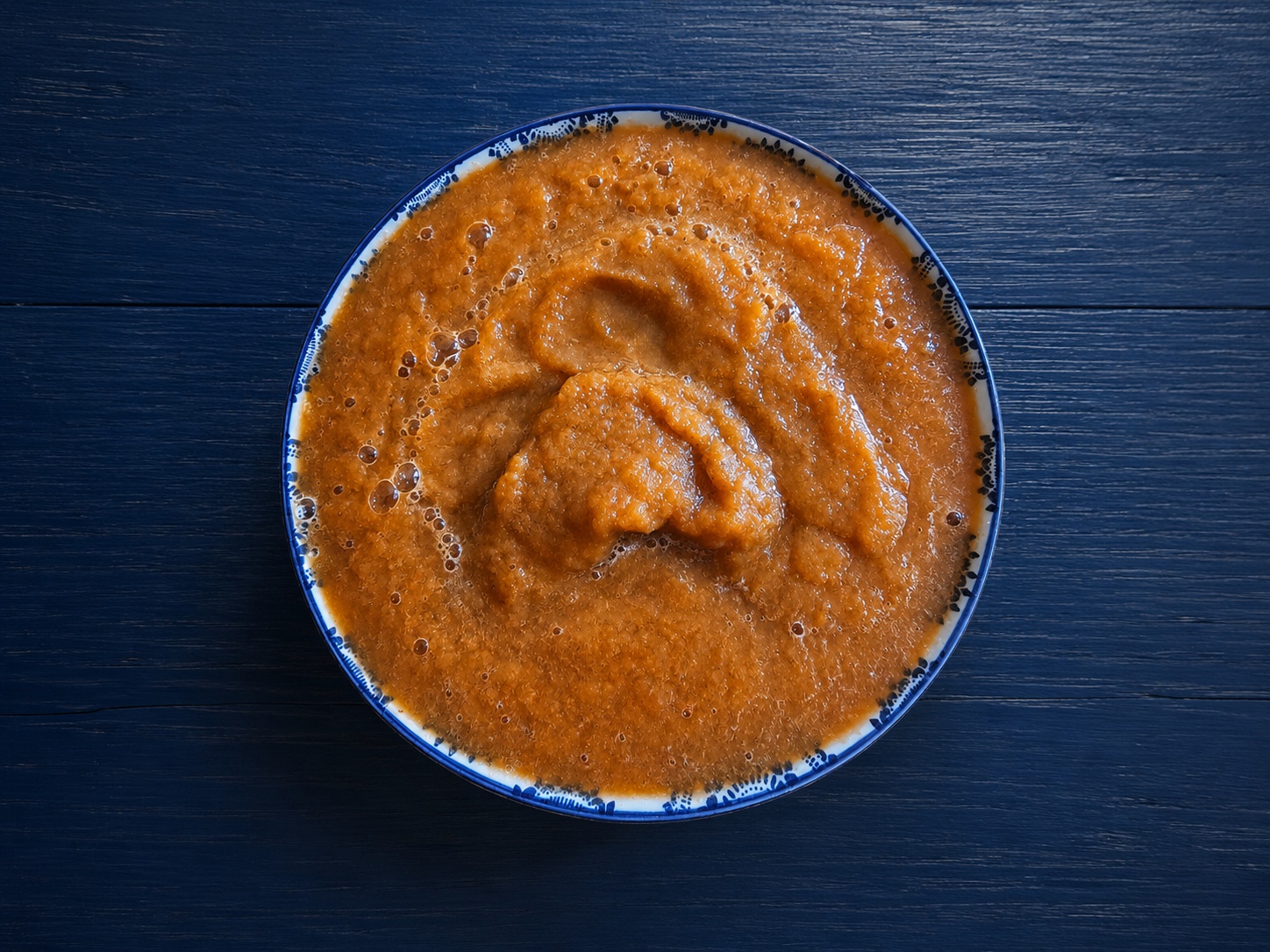
The first time I made it, the color surprised me. Raw ingredients look orange. The finished drink is a deep amber-brown from the beet. It’s not the most appealing color. The taste is earthy, slightly sweet from the apple and carrot, with a clean ginger finish. It took about a week to actually look forward to it. Now if I skip it, the morning feels off.
The Smoothie Recipe
2 medium carrots / 1 apple / 2 stalks celery / 1 tsp beetroot powder / ½ tsp ginger powder / water to blend. No sweetener needed. The apple and carrot handle that. Four minutes including cleanup.
What to Watch For and When
Most studies showing meaningful visceral fat reduction ran for 8 to 12 weeks of consistent consumption. Two weeks of eating these foods and seeing nothing is not a signal to stop. It’s simply too early to measure anything.
At the 8-week mark, the place I’d actually look isn’t the mirror or the scale. It’s what omega-3s are doing underneath all of that. They lower inflammatory markers first, the kind of shift that shows up in bloodwork weeks before it shows up anywhere you can see for yourself. The afternoon energy drop softening, hunger between meals losing its edge, those are closer, more honest signals at this stage than a number that can’t tell the difference between fat loss and the half-dozen other things moving it week to week.
The longer picture matters too. Without interrupting the inflammation and insulin cycle, visceral fat accumulation tends to accelerate after perimenopause. Not just because estrogen keeps declining, but because accumulating visceral fat produces more inflammatory proteins, which worsen insulin sensitivity further. Consistently eating in ways that target the cycle changes the default biological trajectory over time.
That’s a different goal than losing weight for an occasion. Understanding which foods that burn belly fat after 40 actually address the underlying cycle, rather than just overall calorie balance, is what makes the long-term difference. The first step is building enough of these foods into automatic defaults that they stop requiring daily willpower to maintain.
Frequently Asked Questions
Can I just take supplements instead of eating these foods?
For omega-3s, fish oil delivers EPA and DHA but not the selenium, vitamin D, or protein from whole fish. For everything else on this list, no supplement replicates what the whole food does. Blueberry extract doesn’t deliver anthocyanins in the same form. GLP-1 effects require the actual structural fiber in legumes, not an isolated extract. EVOO’s oleocanthal degrades quickly after pressing, and most olive oil supplements have minimal measurable content. The whole foods are the mechanism, not a delivery vehicle for something isolatable into a capsule.
Do I need to eat all seven every day to see results?
Consistent pattern matters more than daily completeness. Eating five of seven reliably is better than attempting all seven for two weeks and burning out. If I were starting from scratch, I’d pick the two furthest from my current eating and build those first. For most people, that’s salmon and legumes. The others tend to integrate once those two are established as defaults. That pattern of building the foods that burn belly fat after 40 into routines rather than meal plans is what makes it sustainable past the initial weeks.
I have thyroid concerns. Is cruciferous safe for me?
Raw cruciferous in large quantities can affect thyroid function through goitrogens. The practical fix is simple: steam for five minutes. That significantly reduces goitrogen content while keeping I3C, DIM, and sulforaphane intact. One daily serving of lightly cooked cruciferous is generally considered appropriate for women managing hypothyroidism, but your specific thyroid situation is worth discussing with your doctor before meaningfully increasing intake.
How long before I see changes specifically in belly fat?
The studies on most of these foods ran 8 to 12 weeks before showing measurable visceral fat changes. I track three things: waist circumference, energy levels by mid-afternoon, and whether the afternoon hunger spike has quieted. At 8 weeks of consistent eating, those three tend to shift before the scale has anything to say.
Does frozen produce work as well as fresh for this purpose?
For blueberries: yes, nutritionally equivalent. The freezing process doesn’t degrade anthocyanins in a way that affects their anti-inflammatory function. For cruciferous vegetables: also yes, though I prefer prepping fresh from Sunday because I can control the steaming time. Frozen broccoli and cauliflower are perfectly fine if fresh prep isn’t practical. The consistency of eating the food matters more than the fresh-versus-frozen distinction.
Which of these seven are you already eating regularly — and which one is the biggest gap? Drop it in the comments. It helps me understand where most people are actually starting from.
Medical Disclaimer: This post is for informational purposes only and does not constitute medical advice. Dietary approaches to belly fat reduction are supportive strategies, not medical treatments. Individual results vary. Please consult your healthcare provider before making significant dietary changes, particularly if you have existing conditions including thyroid disorders, metabolic conditions, or cardiovascular disease.

Grace Young is the founder of LoseFatAfter40Now.com. She writes about what actually works for women navigating weight, hormones, and energy after 40, grounded in research, personal experience, and a commitment to getting the biology right. Read Grace’s full story →