Low Carb vs Low Calorie for Women Over 40: Which Works Better?
I set the watermelon down on the kitchen counter and stood there for a moment, surprised at how much effort the last twenty feet had required. It wasn’t a large one. I’d picked it up the way I always had. Halfway from the garage, my arms had simply run out.
There’s a specific quality to that kind of moment. Not exhaustion exactly. More like discovering that something you’ve always relied on has quietly lost its edge without telling you. My arms were there. They just weren’t what they’d been a year earlier.
I’d noticed other signals too. Climbing to the third floor at school had started requiring something different — a real pause at the top, a breath I didn’t used to need. Before that, I’d been keeping a food diary for seven months, 1,400 to 1,500 calories a day, written down carefully. The numbers were right. My body was running on a different logic entirely.
What I’ve come to understand about low carb vs low calorie for women over 40, and why the comparison isn’t nearly as close as most nutrition advice implies, changed how I think about eating entirely. This post covers what the research shows, what I found when I tried both, and the routine I’ve landed on.
What I Eat Now (and Why It Works)
The first physical sign that something had changed came before I could see it anywhere else. I’d lived with a particular puffiness when I woke up for so long I’d stopped registering it as something that could be different — a heaviness around the eyes and jaw that I’d quietly accepted as just how mornings were. A few weeks into eating this way, I woke up and it was less. I stood at the bathroom mirror genuinely uncertain whether I was imagining it. A week later, it was consistently better. That was when I accepted that what I’d been eating had been contributing to something I hadn’t known could change.
For years, my mornings had a shape: a reliable drop in energy around 11am that I’d learned to plan around. I scheduled anything that required real focus before that and treated the mid-morning stretch as a lower-output time. When that wall stopped appearing with the same reliability, I noticed it the way you notice when a background noise you’ve stopped hearing finally goes quiet.
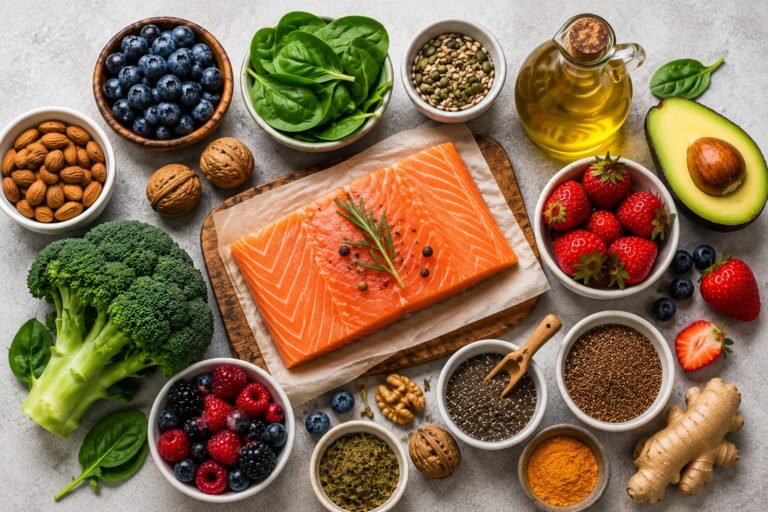
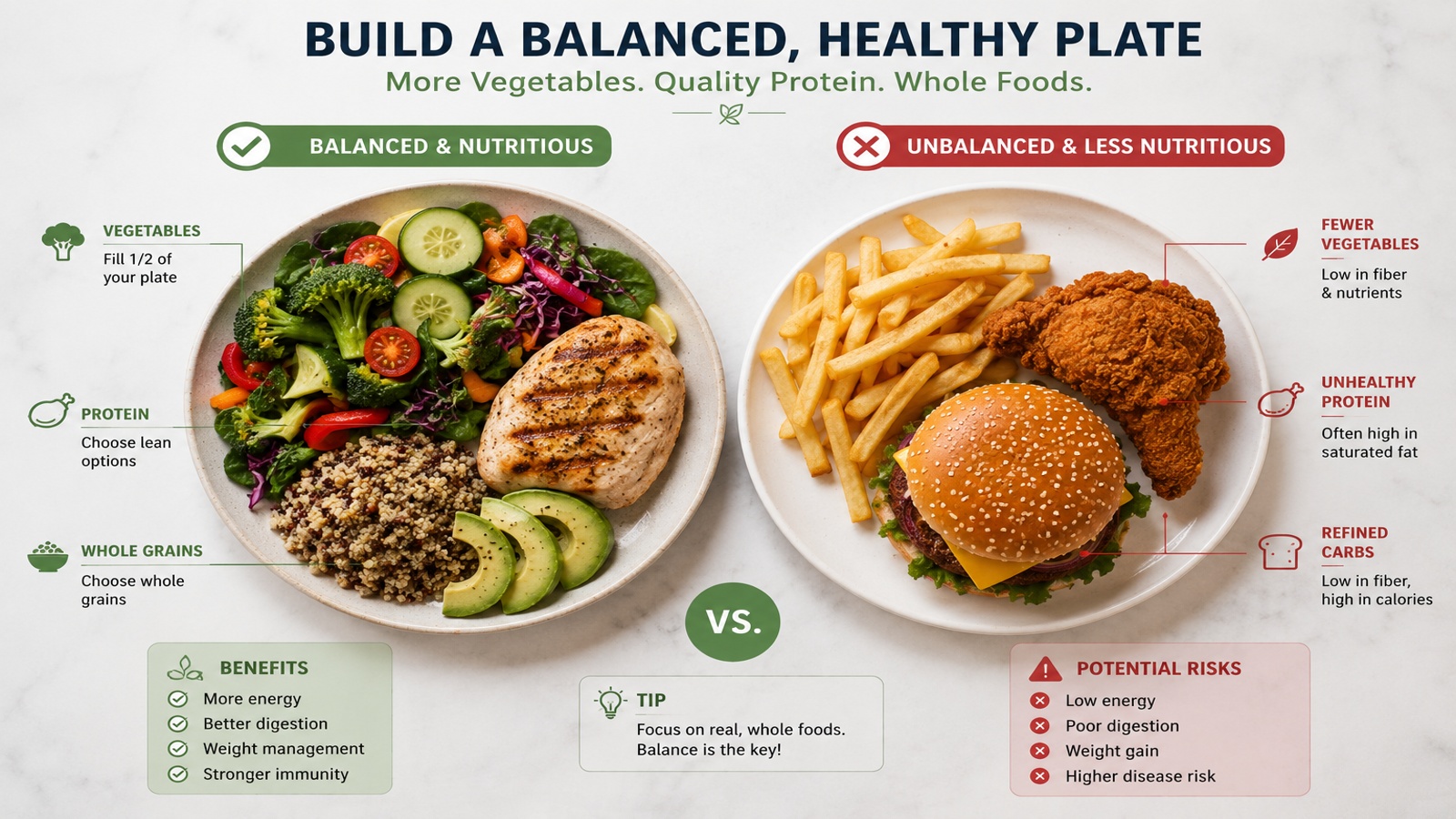
My current eating pattern doesn’t look like a diet. Mornings start with a smoothie: fruit, vegetables, and beans, which gives me protein and fiber before anything else. Lunch is a big salad with rotating proteins: salmon or tuna some days, black beans or edamame on others, always with nuts, no grain component at that meal. Dinner is simpler: a smaller portion of brown rice than I used to eat, a vegetable soup, tofu or beans alongside.
The Approach That Works After 40
- Protein first, 90–120g daily: The non-negotiable foundation. Not as a diet tactic, but as the input that preserves muscle, stabilizes blood sugar, and makes satiety real and lasting
- Moderate carbs, not zero: 80–120g per day from low-glycemic sources (legumes, vegetables, small portions of whole grains) addresses insulin resistance without the cortisol elevation of extreme restriction
- Always pair carbohydrates with protein and fat: Beans with rice, nuts with fruit, protein alongside any grain: this single habit lowers the insulin response to whatever carbohydrates you do eat
- Calories as a check, not a daily task: 1,600–1,800 provides enough fuel to avoid metabolic adaptation; protein and low-glycemic eating moderate appetite naturally
- Mid-morning energy as the real measure: The disappearance of the 11am wall is a more reliable indicator of progress than weekly weigh-ins
What the Research Says About Low Carb vs Low Calorie After 40
The comparison of low carb vs low calorie diets has been studied for years in mixed populations. When you look specifically at perimenopausal and postmenopausal women, the data shifts in a consistent direction, and the gap between the two approaches becomes meaningful.
The Research Numbers
Three things make the low carb vs low calorie question different after 40 than it is for younger women or men.
Insulin resistance increases as estrogen declines. The full mechanism is covered in Estrogen and Weight Gain After 40 →. What matters here: reducing carbohydrates addresses this at the source in a way that reducing calories doesn’t.
Visceral fat accumulates independent of caloric intake. The Obesity Reviews finding is the key one. Post-40 belly fat isn’t primarily a caloric surplus problem. It’s a hormonal fat-storage-direction problem. Eating less doesn’t change where the body is deciding to put things.
Muscle preservation becomes the central metabolic issue. Every pound of muscle lost silently reduces resting metabolism by 6–10 calories per day, every day. Low calorie diets without adequate protein cause the body to break down muscle for fuel. That loss compounds: lower metabolism makes the next phase of fat loss harder, which prompts more restriction, which loses more muscle.
Seven Months, One Food Diary, Zero Results
I started the food diary because I wanted certainty. Not approximation, not guesswork — I wanted to know exactly what I was eating and trace exactly what it was doing to my body. I bought an actual notebook for it. I wrote down every meal, every snack, everything.
My target was 1,400 to 1,500 calories per day. For seven months, I tracked. My weight barely moved. My waistline didn’t change. I kept waiting for some delayed response to show up, some week where the effort would finally register on the scale , and it didn’t come.
The moment that clarified something specific was happening came from carrying a watermelon. It wasn’t a large one. I picked it up in the store the same way I always had, and halfway from the garage to the kitchen I set it down on the counter and stood there for a second, surprised at how much effort that had required.
My arms had changed in ways I could feel before I could explain. The upper arms had become soft in a way that felt different from ordinary tiredness. I started noticing it on the stairs too — three flights at school had started requiring a real breath at the top, a pause I hadn’t needed the year before. That had been my quiet baseline: three floors, no effort. Now there was effort.
The energy drop was harder to read. I couldn’t separate whether I felt depleted from eating too little, or from something else. What I understand now is that both were happening — and they were connected. Eating at a sustained caloric deficit without enough protein pushes the body to convert muscle tissue to glucose for fuel. Less muscle means slower resting metabolism. Slower metabolism makes the deficit feel harder. Less energy follows. The food diary I’d been keeping so carefully was recording a process that was working against itself.
By the sixth month, writing in the notebook had become a task I had to push myself to do. When a practice is producing results, you look forward to logging them. When the numbers say the same thing week after week and nothing is shifting, the act of writing starts to feel like evidence that something is wrong with you. I kept going, but the momentum behind it had gone flat.
Why the Calorie Equation Breaks Down After 40
The standard model (eat less, create a deficit, draw from fat) assumes a relatively stable hormonal environment. After estrogen begins declining, two separate mechanisms interfere with that model in ways that make caloric restriction alone a poor strategy for belly fat.
The first is insulin resistance, which worsens as estrogen declines and which caloric restriction doesn’t address.
The second is the cortisol response to restriction. Sustained low-calorie eating raises cortisol: the body reads reduced fuel supply as a physiological stressor and responds by elevating stress hormones. Cortisol directly promotes visceral fat storage in the abdomen. In the low-estrogen environment, this response is stronger and longer-lasting than it was in earlier decades, because estrogen previously buffered how long cortisol stayed elevated. Eating less was, in a specific biological sense, compounding the belly fat problem rather than solving it.
The Sustained Restriction Problem
Research in the journal Metabolism (2021) found that extended caloric restriction triggers measurable reductions in resting metabolic rate, reductions that can persist for months after intake returns to normal. Combined with cortisol-driven visceral fat accumulation and muscle breakdown for fuel, prolonged low-calorie dieting without adequate protein may produce the worst outcomes of any approach for women over 40.
| What Low Calorie Is Expected to Do | What It Often Triggers After 40 |
|---|---|
| Draw steadily from fat stores | Raises cortisol, directing storage toward belly fat |
| Reduce body weight consistently | Metabolic adaptation slows resting burn within weeks |
| Preserve body composition | Muscle used for fuel when protein intake is insufficient |
| Reduce hunger over time | Ghrelin (hunger hormone) rises with sustained restriction |
| Improve long-term energy balance | Less muscle lowers baseline calorie burn permanently |
What Changed When I Cut the Carbs Instead
The shift didn’t happen from a single decision. I started making smaller changes: reducing the amount of brown rice I ate at dinner by roughly a quarter, and cutting back on white bread and flour-based foods that had been daily habits. Not eliminating carbohydrates entirely. Reducing the refined ones and shrinking the grain portions.
The first change I noticed was in my face. I had gotten used to a particular puffiness in the morning that I’d long since stopped thinking of as something I could change. A few weeks into reducing the grains, that puffiness started clearing. My face looked more defined when I woke up. The change was subtle enough that I didn’t immediately connect it to what I was eating, but it was consistent enough that I kept noticing it.
A few weeks after that, the area around my waist started shifting. Clothes I’d been wearing the same way for a long time began sitting differently on the sides. The area that had pulled or bunched at the hip started to ease. It was gradual, not a transformation, just a quiet reversal of what had been slowly accumulating.
What was happening physiologically is that reducing carbohydrates was lowering the insulin response to meals. Less circulating insulin meant less glucose being directed to fat storage. More importantly, blood sugar was staying more stable throughout the day. The hard afternoon drop that had been a predictable feature of my days, that wall of fatigue and difficulty concentrating arriving reliably around 11am, started to ease. Then it mostly disappeared.
What Reducing Carbs Does in the Low-Estrogen Body
- Lowers insulin response to meals: less insulin circulating means less glucose directed to visceral fat storage, addressing the primary post-40 mechanism
- Reduces visceral fat preferentially: multiple randomized trials show greater reductions in abdominal fat with low carb vs low calorie diets, even at equivalent total weight loss (Annals of Internal Medicine, 2014)
- Stabilizes blood sugar across the day: fewer carbohydrates means smaller glucose spikes and shallower drops; the afternoon energy wall is a blood sugar problem, not a sleep deficit
- Lower cortisol impact than caloric restriction: moderate low carb eating doesn’t trigger the same physiological stress response that sustained calorie cutting does
The Muscle Question Nobody Talks About
The watermelon moment stayed with me because it was specific and undeniable. I wasn’t tired that day. I wasn’t sick. I simply had less strength in my arms than I’d had a year earlier, and nothing I’d done had caused it intentionally. It had gone somewhere without announcement.
The connection between low calorie dieting and muscle loss is direct. When the body runs in a sustained caloric deficit without sufficient protein; and 1,400–1,500 calories rarely delivers the 90–120 grams needed to prevent breakdown after 40, converting muscle tissue to glucose for fuel). The process is invisible in the moment. It shows up later: in softer upper arms, in a watermelon that suddenly takes two hands, in stairs that require slightly more effort than they did two years ago.
Low carb diets, when paired with adequate protein, are significantly more muscle-sparing than low calorie diets alone. The mechanism again is insulin: the modest insulin response from protein and fat intake supports muscle protein synthesis in a way that calorie-restricted, higher-carbohydrate eating doesn’t. The body has less reason to break down muscle when it has a more stable fuel source available.
For women over 40, this difference compounds in both directions. Preserving muscle through the transition keeps resting metabolism higher, which makes fat loss easier at every subsequent stage. Losing muscle in pursuit of a lower number on the scale lowers resting metabolism, making everything harder going forward. The choice between the two approaches isn’t just about what happens this year. It shapes how the body responds for years after.
Frequently Asked Questions
For belly fat specifically, is low carb or low calorie more effective after 40?
For visceral belly fat in women over 40, low carb has the stronger evidence. The low carb vs low calorie comparison in this population consistently shows greater reductions in visceral abdominal fat with low carb approaches, even when total weight loss is equivalent. The mechanism, reducing insulin to address the insulin resistance that worsens with estrogen decline, directly targeting the primary driver of post-40 belly fat in a way that caloric restriction doesn’t.
Will low carb work if I exercise regularly?
Moderate low carb (80–120g per day) is compatible with most exercise programs including resistance training. Very low carb (under 50g per day) can impair high-intensity exercise performance because intense effort requires glucose. If you train hard, keeping carbohydrates timed around workouts: a small amount of brown rice or sweet potato before or after training, giving you what you need for performance without undermining the insulin-lowering benefits throughout the rest of the day.
Do I have to track calories on low carb?
Not strictly. High-protein, low-glycemic eating tends to regulate appetite naturally without tracking. According to Mayo Clinic’s overview of low-carb diets, the satiety effect of higher protein and fat intake is a key mechanism. If results plateau despite eating well, tracking for two to four weeks often reveals something specific: most commonly eating too little (triggering metabolic adaptation) or underestimating portions.
How long before low carb produces visible belly fat results after 40?
The first change low carb produces isn’t visible — it’s measurable, and you can feel it before you can see it. Blood sugar starts stabilizing within the first one to two weeks of consistent low-glycemic eating. The signal is the mid-morning or afternoon energy pattern: the familiar crash and urgent hunger either softens or shifts noticeably. That’s insulin starting to regulate rather than spike and plummet. Visceral fat follows insulin, not the calendar. Once insulin is staying lower between meals, the fat-storage signal to the abdomen starts to quiet. Visible waist changes typically begin around six to eight weeks — but by that point, the blood sugar picture has usually been improving for a month already. If nothing is changing by week four, the first question isn’t how much longer to wait. It’s whether the carbohydrate sources are actually low-glycemic, or whether hidden glucose sources are keeping insulin elevated.
Do I need to eliminate all carbohydrates?
No, and strict elimination can create problems of its own after 40. Very low carb eating may suppress thyroid function with prolonged use in some women, and can elevate cortisol during the adaptation phase, both counterproductive in the low-estrogen environment. Moderate reduction, to 80–120g per day from low-glycemic sources, produces most of the insulin-lowering and visceral fat benefits without the risks of extreme restriction. Removing white flour and refined carbohydrates while keeping legumes, vegetables, and small portions of whole grains is the practical version that most women over 40 can sustain long-term.
Did calorie counting stop working for you the way it did for me, or did you find a different turning point? Leave a comment: the specific experiences of women in this decade are far more useful than general advice, and I read every one.
The Bottom Line
The low carb vs low calorie comparison for women over 40 isn’t close when the specific mechanisms are on the table. Low calorie eating addresses a single variable (energy in) while leaving the hormonal environment driving visceral fat accumulation unchanged, and often making cortisol elevation and muscle loss worse in the process.
Low carb, in a moderate form (80–120g per day from low-glycemic sources), addresses insulin resistance directly, carries a lower cortisol burden than caloric restriction, and is significantly more muscle-sparing when combined with adequate protein. The combination isn’t a diet. It’s a recalibration of the metabolic environment that the hormonal changes of your 40s have shifted.
Protein is where to start. Get to 90–100g daily before changing anything else. That single adjustment shifts the metabolic foundation and makes every other change easier and more durable.
Medical Disclaimer: This post is for informational purposes only and does not constitute medical advice. Please consult with a qualified healthcare provider before making significant changes to your diet, particularly if you have diabetes, thyroid conditions, or other metabolic health concerns.

Grace Young is the founder of LoseFatAfter40Now.com. After years of following conventional advice that quietly stopped working, she went deep into the research on hormones, metabolism, and midlife physiology to find what actually does. Everything on this blog comes from that investigation, and from living it. Read Grace’s full story →