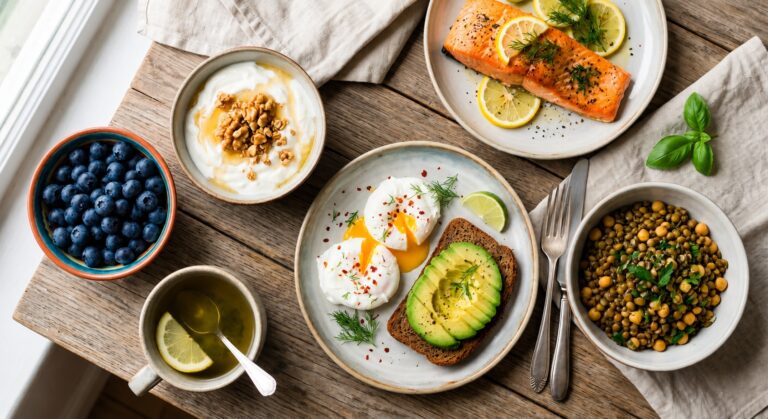
How Much Protein Do Women Over 40 Really Need?
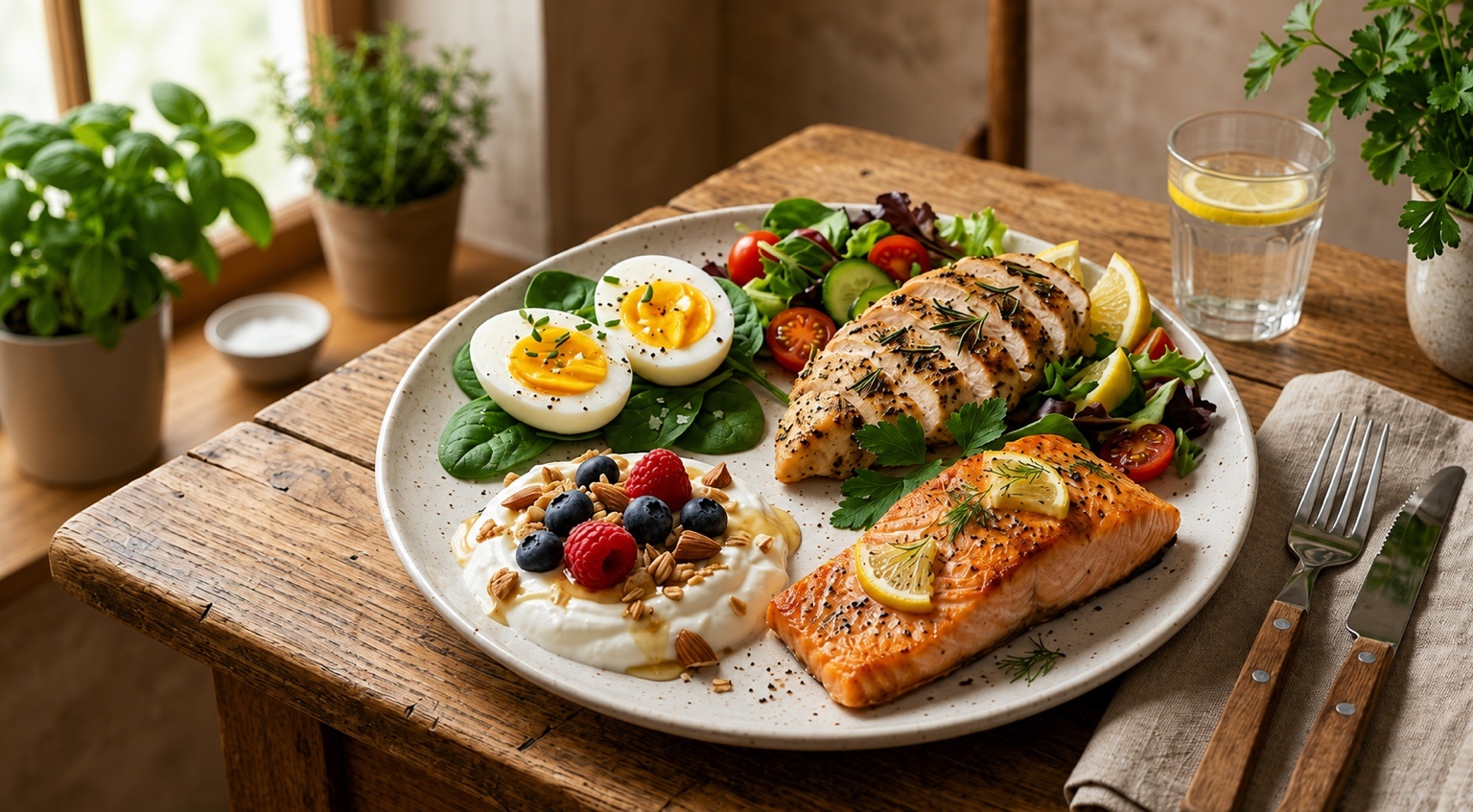
Two breakfasts. Same kitchen, same woman, two years apart. The one question I’d kept putting off, how much protein women over 40 actually need, turned out to be one of the most practical things I ever answered for my body.
Version one: I’d pour coffee, drop a slice of bread in the toaster, and call it done. It took four minutes. I thought I was eating smart: light, simple, not too much. By 10:30 AM I was fine. By 1 PM, after a salad that was mostly lettuce and half an avocado, I was fine again. Then 5 PM would arrive and something in me just collapsed. I didn’t want anything healthy. I wanted a croissant and a latte with extra cream and extra sugar. Every afternoon, like clockwork.
I blamed my willpower. For years I assumed I just had a weak afternoon character.
Version two, same kitchen now: I eat eggs in the morning, sometimes with tofu, sometimes with Greek yogurt on the side. My salad at lunch has chickpeas or edamame in it. By 5 PM I’m still working. The croissant doesn’t call to me the way it used to. Not because my willpower got stronger. Because my body finally has what it needs to carry itself through the day.
The difference between those two versions of my afternoon isn’t discipline. It’s protein: specifically, how much protein women over 40 actually need. The real question isn’t whether you should eat more of it. It’s exactly how much, and why the standard advice misses the mark entirely at this stage of life.
This post covers the actual numbers that research supports for protein women over 40 need, the biology behind them, and what hitting your daily protein target realistically looks like on a plate. Because “eat more protein” without a specific target isn’t advice, it’s noise.
The Morning That Made Me Look Back
For a long time I thought I was eating well. I really did. My breakfasts were light. I figured that was virtuous. My lunches were salad-based, heavy on vegetables and fruit. I was eating less than I used to. That was the goal, wasn’t it? Less in, less weight.
But my body wasn’t cooperating with that logic. I was tired in ways I couldn’t explain. My arms and thighs had gone soft, and not just in terms of size but in quality. They had this floppy, not-quite-there feeling. I’d pick up grocery bags and there was a moment of effort I didn’t remember from five years earlier. I started to think this was just what getting older felt like.
Then I read something in a health article that stuck with me: women after 40 often under-eat protein without realizing it, and the consequences, including muscle softness, persistent hunger, slow recovery, and sugar cravings, are exactly what I was experiencing. I sat with that for a while.
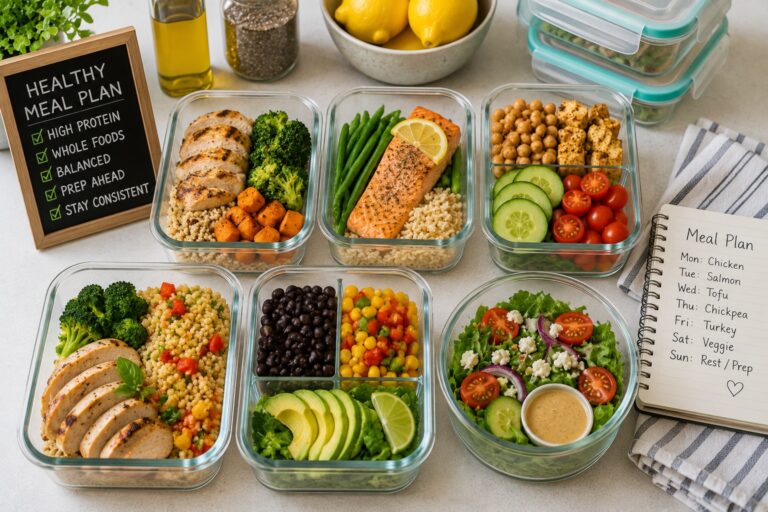
I didn’t overhaul anything dramatically. I just started looking at my plate differently. I added an egg or two to breakfast. I put chickpeas or edamame or black beans into my salad at lunch instead of leaving it as a purely vegetable affair. I swapped my afternoon rice cakes (I could work through half a bag without looking up) for Greek yogurt or a protein shake. That was it, at first.
What Shifted When I Started Paying Attention
The first thing that changed wasn’t my weight. I want to be clear about that, because I think a lot of women expect protein to produce some immediate visual result and then feel disappointed when the scale doesn’t move in week one.
What changed first, within about seven to ten days, was that the 5 PM wall got shorter. I’d still have a slight dip, but it wasn’t the desperate, can’t-function kind. The urge to find something sweet or starchy faded to something I could actually just ignore. I remember thinking: wait, is this what other people feel like every afternoon?
Two to three weeks in, I felt a difference during exercise. I’d been doing light resistance work at home: lunges, band exercises, some wall push-ups. I used to wobble off a lunge in about two seconds. Seriously, I’d start the movement and just crumple sideways. A few weeks after I started eating more protein, I held one. Not perfectly, not for long, but I held it. I was embarrassingly pleased with myself. My body was starting to hold itself differently.
The weight eventually followed, but those body-feel changes came first. I think that order matters. If I’d been watching the scale only, I might have given up before the real changes arrived.
- Afternoon hunger becomes less urgent within 1–2 weeks
- Sugar and carb cravings reduce. This is biology, not willpower
- Workout recovery feels slightly easier (2–3 weeks)
- Muscles feel less soft and more responsive over 4–8 weeks
- Body composition shifts — muscle protein synthesis needs several more weeks of consistent intake before the change becomes visible. The synthesis and the visible result don’t arrive together; typically 8–12 weeks before you see what’s been building
Why Protein Needs for Women Over 40 Go Up, Not Down
Here’s the counterintuitive part: your protein needs go up after 40, not down. Most women assume that eating less overall, including less protein, is the path to managing weight. The biology says otherwise.
The mechanism is called anabolic resistance — after 40, muscles respond less efficiently to the same amount of protein, a change covered in depth in What to Eat Before and After a Workout at 40 →. What that means practically: the input needs to go up to get the same muscle-building result you used to get automatically.
This plays out in several ways simultaneously:
Muscle loss accelerates without adequate protein as raw material. The natural rate of muscle loss after 30 is roughly 3 to 5 percent per decade. Without enough protein to slow that process, you lose metabolically active muscle tissue, which is the tissue that burns calories at rest. Less muscle means a slower resting metabolism, which is one of the reasons fat accumulates more easily after 40 even when you haven’t changed what you eat.
Cortisol becomes more dominant. When estrogen falls, cortisol, often called the stress hormone, has less opposition. Protein helps buffer cortisol’s catabolic effects on muscle. Under-eating protein while under any degree of stress accelerates muscle breakdown faster than most women realize.
Bone matrix weakens. Collagen, the structural protein in bone, requires adequate dietary protein to maintain. Calcium alone cannot compensate for protein deficiency in bone health, a connection that’s often overlooked entirely in conversations about osteoporosis risk after menopause.
How Much Protein Women Over 40 Actually Need: RDA vs. Reality
The standard recommendation you’ll see everywhere is 0.8 grams of protein per kilogram of body weight per day. For a 150-pound woman, that’s roughly 55 grams daily. This is the official RDA, and it’s the number most protein guides for women over 40 still use as their target. The problem is that it was never designed for this stage of life.
The problem with citing this number for women over 40 is that the RDA was calculated to prevent protein deficiency in the general population, not to preserve muscle and support metabolism during the hormonal shift of midlife. It’s the floor, not the ceiling. Hitting the RDA means you won’t develop a deficiency. It doesn’t mean you’re supporting your body at the level it actually needs right now.
The International Osteoporosis Foundation, along with multiple research groups studying protein needs in aging adults, consistently recommends a higher target for active women over 40: 1.2 to 1.6 grams of protein per kilogram of body weight per day. A 2020 position statement published in Nutrients reinforced this range, noting that the higher end is appropriate for women doing any form of resistance training.
| Body Weight | RDA Minimum (0.8g/kg) | Research-Supported Target (1.2–1.6g/kg) |
|---|---|---|
| 120 lbs (54 kg) | 43g/day | 65–87g/day |
| 140 lbs (64 kg) | 51g/day | 76–102g/day |
| 160 lbs (73 kg) | 58g/day | 87–116g/day |
| 180 lbs (82 kg) | 65g/day | 98–130g/day |
| 200 lbs (91 kg) | 73g/day | 109–145g/day |
For most women over 40 at moderate activity levels, a practical daily target in the range of 90 to 120 grams is both realistic and well-supported by research. If you’re doing consistent resistance training, the higher end of that range is appropriate.
Per-Meal Distribution: The Detail Most Guides Skip
Total daily protein matters. But how you distribute it across the day matters almost as much. And this is the piece most nutrition guides skip entirely. The research on optimal protein distribution for women over 40 is clear on this point.
Muscle protein synthesis, the process by which your body builds and repairs muscle tissue, responds to individual meals, not just your daily total. Research consistently shows that a stimulus of around 25 to 40 grams of protein per meal produces a stronger and more sustained muscle-building signal than eating the same daily total concentrated in one large serving. Your body can only use a certain amount of protein at once for this process; the rest is metabolized for energy.
For women over 40, where anabolic resistance means the signal is already weaker, spreading intake across meals is even more important. Skipping breakfast protein, or eating a very low-protein breakfast and compensating with a large protein-heavy dinner, loses the benefit of that morning stimulus window. Your muscles don’t carry over the signal from dinner to the next morning.
What 25–30 Grams Actually Looks Like
This is where knowing the number becomes useful. Here’s how 25 to 30 grams of protein looks at each meal, including the plant-based combinations I rely on most, since I tend toward plant-forward eating while not eliminating animal protein entirely.
Breakfast (25–30g)
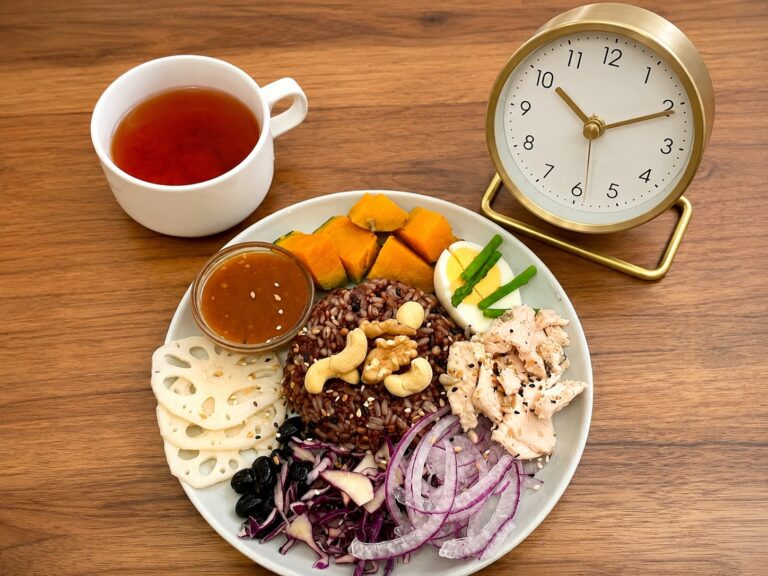
My morning now usually starts with two eggs plus a half cup of Greek yogurt on the side; that combination hits about 28 to 30 grams. On days I want something faster, a smoothie with one scoop of protein powder, a cup of unsweetened almond milk, and half a cup of Greek yogurt gets me to the same range. If I want something savory, a tofu scramble with two eggs comes in around 26 to 28 grams. The coffee-and-toast version I used to rely on? Under 8 grams.
Lunch (25–35g)
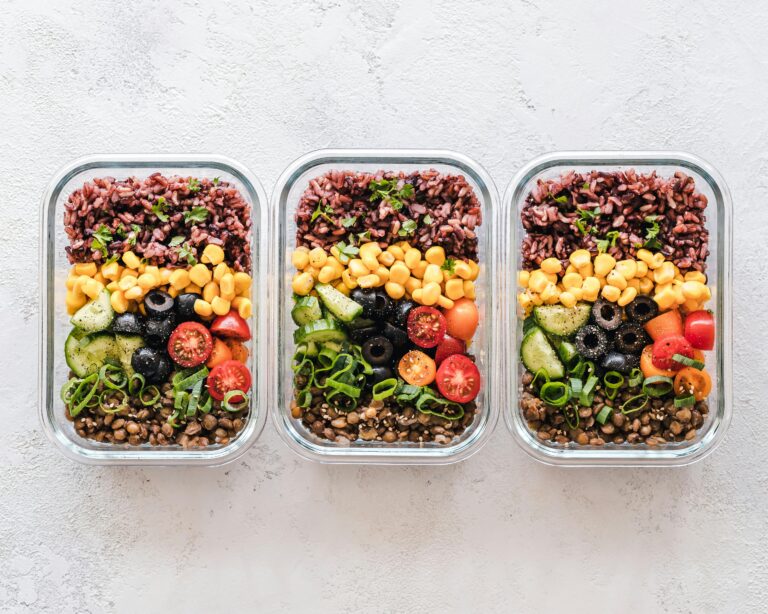
My standard is a large salad with a rotating plant-based protein: chickpeas, black beans, edamame, or lentils. Adding half a cup of chickpeas to a salad brings it to roughly 22 grams. I’ll add a hard-boiled egg on the side if I want to close the gap to 28 to 30. On days I’m eating fish, five ounces of canned tuna over greens reaches 35 to 38 grams easily. The key shift was treating protein as the center of the bowl. Not the afterthought.
Dinner (25–35g)
Dinner for me usually involves either fish (salmon or cod) or a combination of tofu and legumes with vegetables. A five-ounce salmon fillet with roasted vegetables and a small sweet potato hits around 32 grams. A firm tofu stir-fry with half a cup of edamame comes in around 25 to 28. I don’t cut carbohydrates at dinner. I’ve just reorganized the plate so protein is what I plan around, and the rest fills in around it.
Snacks (when needed)
If my main meals land short of my target, I’ll reach for Greek yogurt (10g per half cup), a hard-boiled egg (6g), or a small portion of edamame (9g per half cup). I used to snack on rice cakes exclusively. I haven’t stopped eating rice cakes entirely, but they’re not what I reach for first anymore. That change came from the body, not from discipline.
The Best Protein Sources for This Stage of Life
Not all protein sources work equally well for women over 40. Two factors matter most when thinking about protein for women over 40: bioavailability (how efficiently your body absorbs and uses the protein) and leucine content.
Leucine is the amino acid most directly responsible for triggering muscle protein synthesis. After 40, when anabolic resistance means that trigger is harder to pull, leucine-rich protein sources have a real advantage. Eggs, dairy, salmon, chicken, and soy are all high in leucine. Plant proteins like lentils and chickpeas contain meaningful leucine but require somewhat larger portions to produce the same stimulus.
For women eating mostly plant-based, soy is the single most valuable protein source: tofu, tempeh, and edamame are the only plant foods that are both complete proteins and leucine-rich. I keep firm tofu and frozen edamame stocked constantly.
On protein powder: I use it, and I don’t think of it as a shortcut. I think of it as a practical bridge between what I can realistically prepare and what my body actually needs. A quality whey isolate or a clean plant-based blend with minimal additives is a completely legitimate tool. The caution is on products loaded with sugar, artificial sweeteners, or ingredients you can’t identify. Those aren’t worth the convenience.
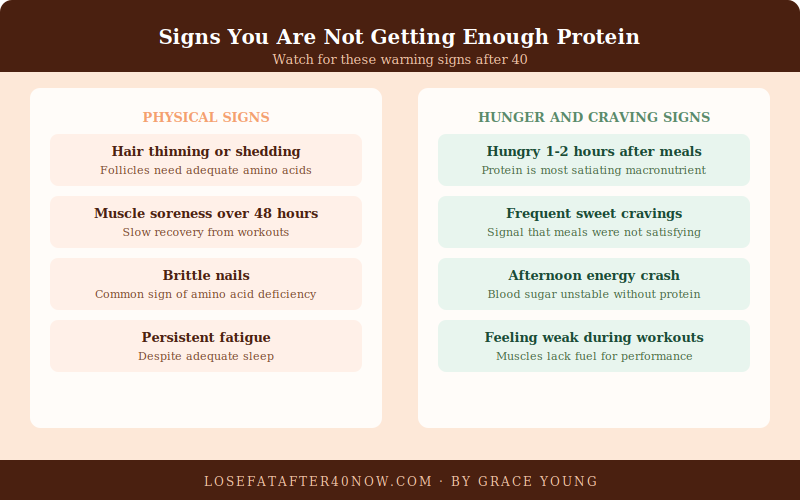
Signs You’re Probably Under-Eating Protein
Most women don’t track protein and have no idea how much they’re actually getting. The research on daily protein intake for women over 40 suggests most are falling significantly short. The body gives clear signals, and I ignored all of mine for years. Here’s what to watch for:
You’re hungry again 90 minutes to two hours after a full meal. Protein is the macronutrient most responsible for satiety. A meal that leaves you reaching for food again within two hours is almost certainly low in protein, regardless of how large it was by volume.
Afternoon sugar and carb cravings are persistent. This was my most reliable signal. The brain responds to unstable blood sugar (which protein stabilizes) by demanding fast fuel. If the craving is predictable and time-based, the morning’s protein intake is usually the culprit.
Workout soreness lasts more than 48 hours. Muscle repair requires amino acids from dietary protein. Slow recovery is one of the clearest indicators that intake is insufficient for the physical demand you’re placing on your body.
Your muscles feel soft regardless of your exercise routine. If you’re moving consistently but nothing feels firmer or stronger, under-eating protein is a likely contributor. Exercise provides the stimulus; protein provides the building material.
Hair is thinning or shedding more than usual. Hair follicles are protein-dependent. Chronic low protein intake can manifest as increased shedding before it shows up in other ways.
Frequently Asked Questions
Is eating 100+ grams of protein a day safe for women over 40?
For women with healthy kidney function, high protein intake is consistently shown to be safe across multiple long-term studies. The concern about kidneys and protein applies specifically to people with existing kidney disease or reduced kidney function. If that applies to you, discuss your specific target with your healthcare provider. For everyone else, adequate hydration supports kidney function at higher protein intakes, which you should be prioritizing regardless.
Can I meet my protein needs on a plant-based diet?
Yes, but it takes more planning than a diet that includes animal protein. The key is building meals around complete protein sources (soy, quinoa) and high-protein legumes (lentils, chickpeas, black beans), and accepting that total daily intake may need to be slightly higher to compensate for somewhat lower bioavailability. A quality plant-based protein powder can bridge the gap on higher-demand days.
Does protein intake affect menopause symptoms?
Indirectly, yes. Adequate protein helps preserve muscle mass and support bone density, both of which decline more rapidly after menopause. It also stabilizes blood sugar, which reduces the energy crashes and mood instability that many women experience during the menopausal transition. It’s not a direct treatment for symptoms like hot flashes, but the secondary effects on metabolism and energy are real.
When is the best time to eat protein: morning or evening?
The most impactful change most women can make is increasing breakfast protein, not because morning is metabolically special, but because most women already eat protein at dinner and under-eat it at breakfast. Distributing intake more evenly, starting with breakfast, produces better muscle-preservation results than loading up on protein only at dinner.
How do I know if I’m actually hitting my protein target?
Tracking for three to seven days using a free app like Cronometer or MyFitnessPal is the most reliable way to find your actual baseline. Most women are surprised by how far below target they are. Once you know your gap, adjusting one meal at a time (typically starting with breakfast) is more sustainable than trying to overhaul everything at once.
The question of how much protein women over 40 really need has a real answer — and it’s significantly higher than the number most of us were handed growing up. Your body isn’t working against you when you feel tired, soft, or perpetually hungry. It may just need more protein than you’re giving it.
Start with breakfast. Check every meal for protein. Give it two weeks before you judge it. The changes I felt were steadier afternoons, stronger workouts, muscles that actually respond. They came quietly, without drama. Every one of them.
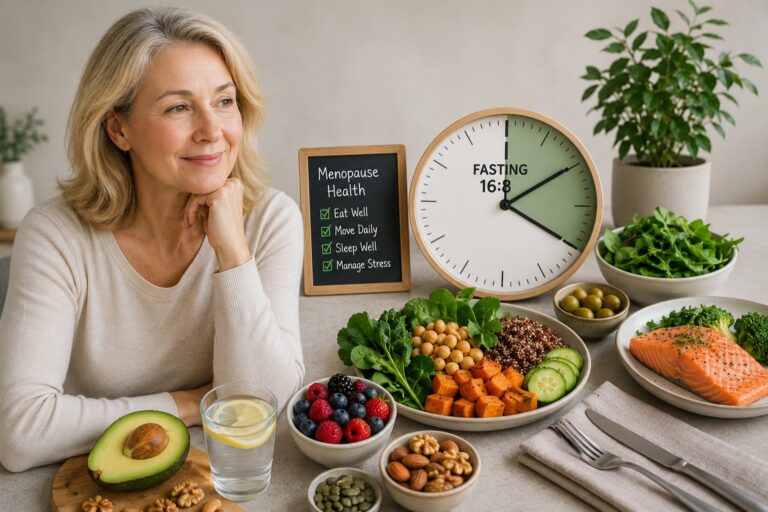
If you’re also thinking about meal timing alongside protein intake, this post on intermittent fasting is a useful next read: Intermittent Fasting for Women Over 40: A Smarter Way to Burn Fat →
What’s been your biggest protein challenge: getting enough at breakfast, finding plant-based options, or something else entirely? Leave a comment below. I read every one.

Read Grace’s full story →